Oh, the Horror!
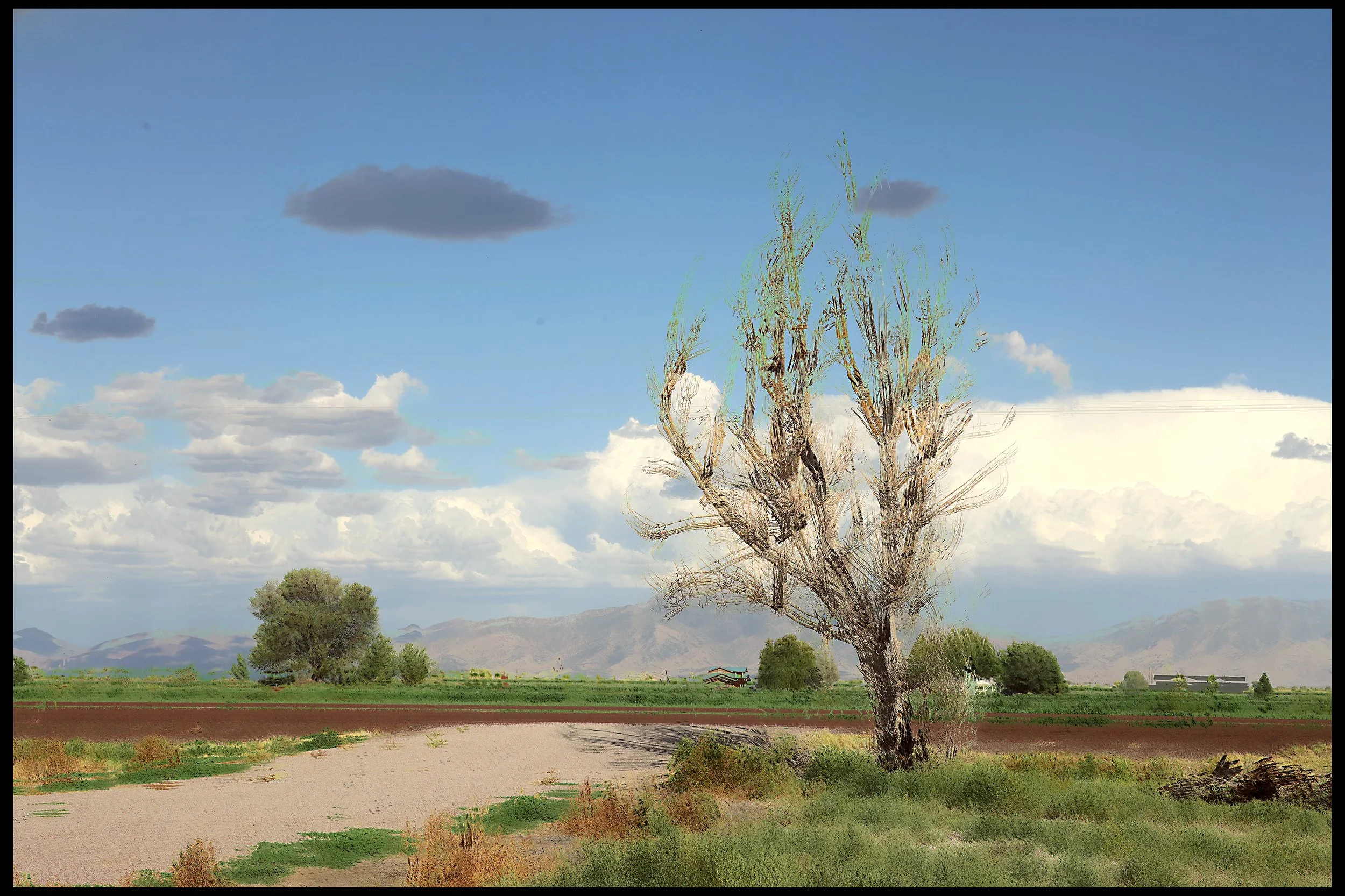
“A View from the Front Yard” This is a five image-multiple exposure from Hinckley, Utah, September 2026
Hello Friend,
To be honest, the idea for this week’s blog came to me recently, when my wife bought a copy of the book “Why I Love Horror” (edited by Becky Siegel Spratford and one of the 2026 winners of the Bram Stoker Awards), and nothing to do with Halloween. The book is an anthology of essays from some of the top writers in the field and how they got into writing horror. I decided to pick it up, not because it was about horror, but because I enjoy finding out how writing got to be such a big part of the creative lives of these authors. My wife is much more the horror enthusiast, and I just look upon it on occasion because it’s such a big part of her life. I want to look at this more from the idea of a creative pursuit – and not so much about horror itself – because there are many forces at play that I think can be applied to many of our different creative endeavors. (But first I hear one of our cats scratching at the backdoor to be let back in… Odd, no cat at the door, and I see they are all asleep with my wife…)
As I said, my wife is the horror chick in the house. I’m just a tourist; she actually lives there. Her bookshelves, library favorites list, and Amazon shopping cart are full of horror books and movies of almost all the subgenres. Her happy place on a stormy weekend like this, is to put on a scary movie (most likely a found footage in an abandoned mental hospital) while she pulls out her yarn to work on a crochet project. Lately it’s been baby blankets. (But, not for the reason you might be thinking. Because there have been a few new babies born in the family, and she wants them to grow up to love her and worship her. Sheesh, people.) I’m sure there are a lot of people like her who can sit and enjoy these very different and almost opposing worlds. Me, I’m happier reading and watching fantasy and sci-fi. Though, there is some overlap.
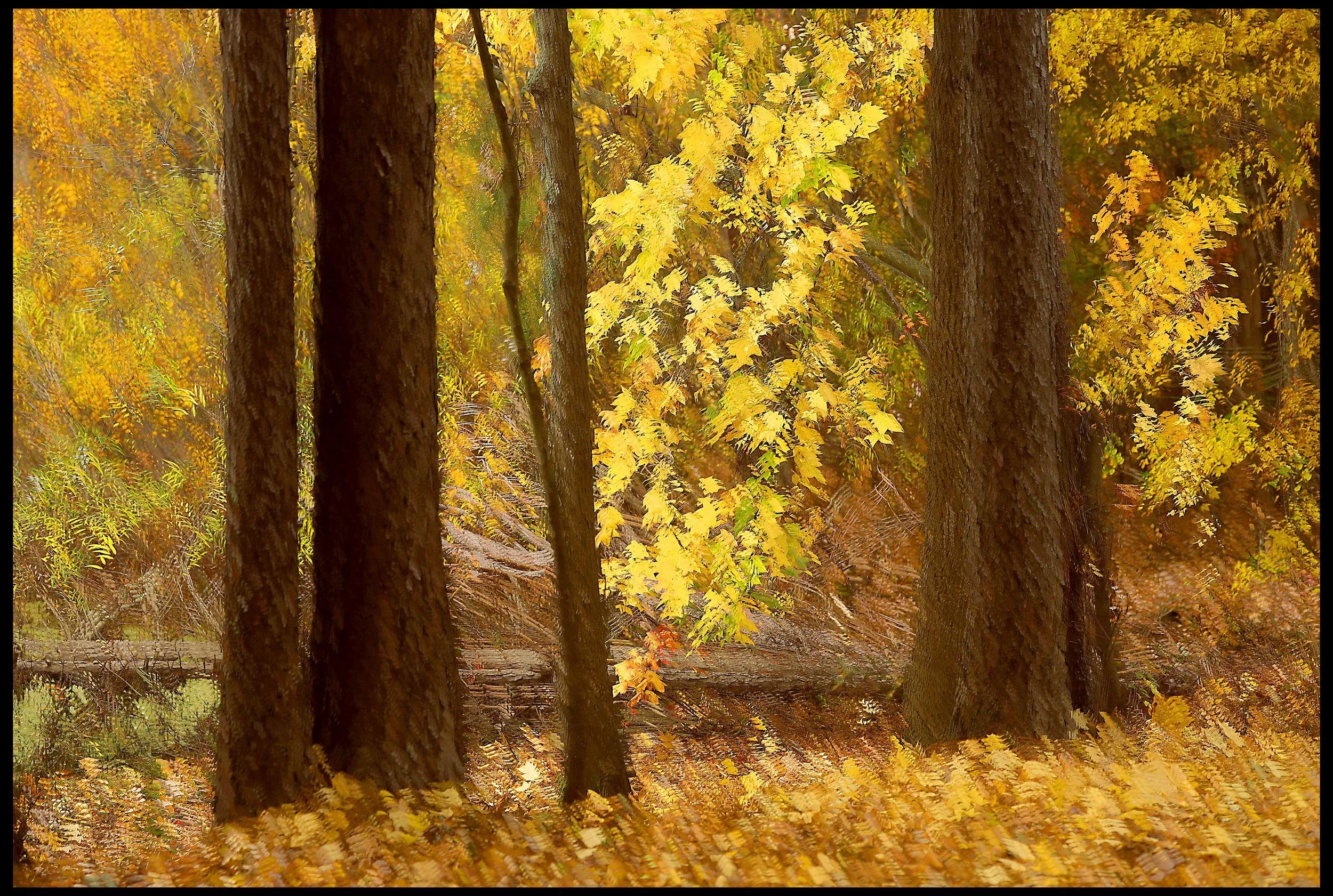
“Fall in the Bay II” This is a five-image multiple exposure from the Carolina Bay, Aiken, SC, November 2025
And on occasion, I do go for some short swims in those more turbulent waters. We even had a recent family book club with “King Sorrow” by Joe Hill that was nominated for the Bram Stoker Award. While we read it, and when we finished it, we had some very lively discussions about the book, the characters, the situations and the themes. And it is these themes within the works of horror and by their creators that I think are worth exploring further.
(Sorry, I stepped away for a minute to get on a hoodie. My office just got a lot colder…)
Yes, horror has themes. Such as the overarching one of “King Sorrow”: Would you be willing to sacrifice a person – a person you don’t even know – to be killed once a year, so you and your friends could have the most successful lives possible? There might be a couple people out there thinking, “Tell me more about how I can be wildly successful like this”. But I’m sure the rest of you think that price would be too high to pay, and would want nothing to do with it. And that is the beauty of horror – and really reading any story – you get to jump into a world where you learn about what is going on, what are the struggles and fears of other people, what is at stake in that world, and then think about how you would handle the same situations.
As my wife and I talked about her love of horror, this was one of the reasons she enjoys the genre. She sees how these ordinary people in the stories react, and she questions what she would do in a similar situation. Would she be one of the brave ones to fight the monsters? Would she run away? Would she freeze up? Would she go it alone or work with a group? Would she completely ignore the monster, and refuse to believe it could even exist? She did say, she hopes she would at least scoop up the children and rush them to safety. But that’s it, we don’t know. And the beauty of reading these types of stories is you start to see yourself as one of the characters.
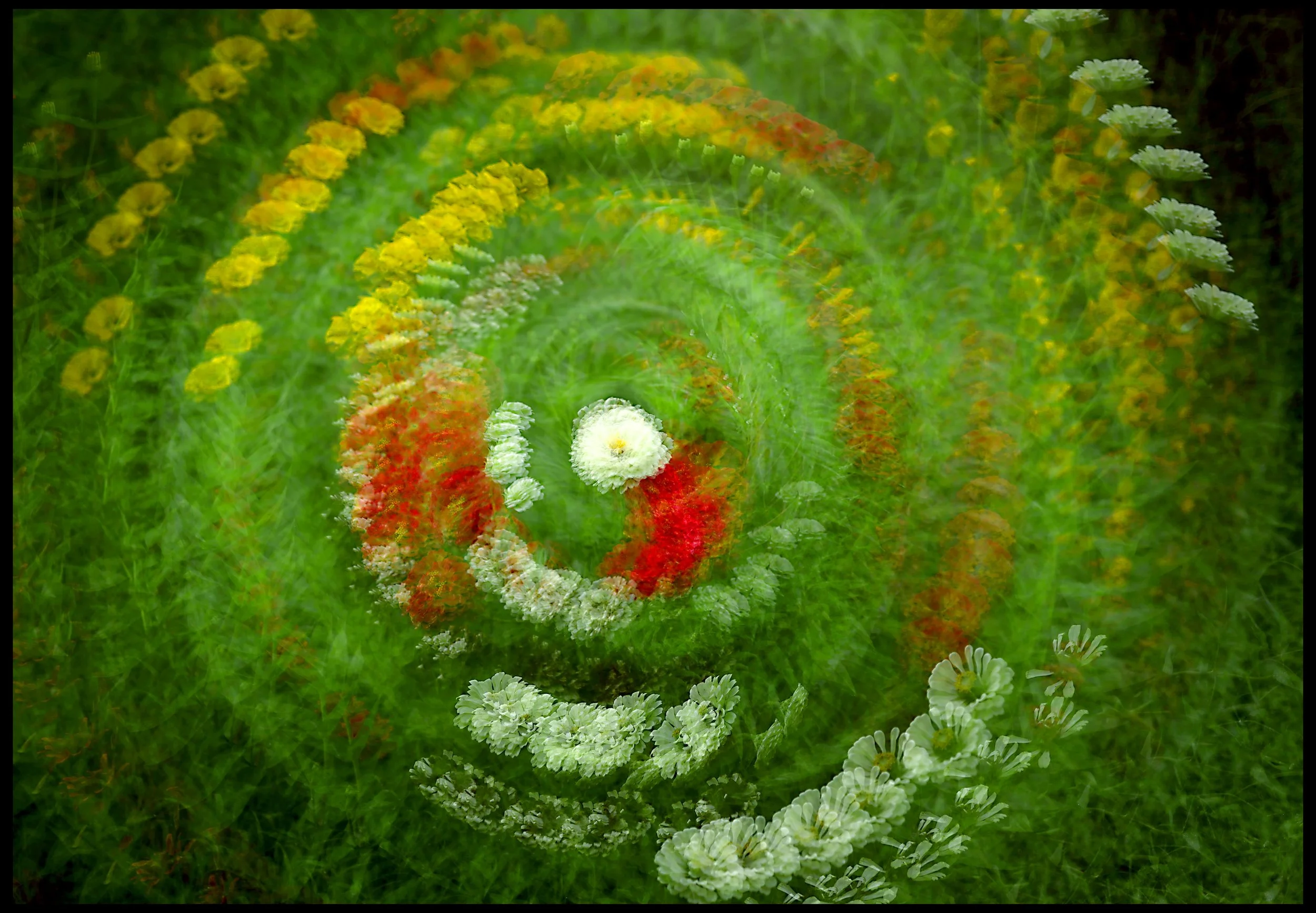
“Zinnias in the Round” A nine-image, hand-held multiple exposure from my sister’s garden in Hillsborough, NC, August 2026
That is one of the things I am starting to really appreciate about the horror world: Almost all the characters are everyday people put into fantastical and horrific situations – most are not of their making. They then must navigate as best as they can until they either confront the monster/fear or they escape it. And if you know anything about horror, there really is no escape. Thus, the only real path forward is to confront whatever it is, and try to defeat it yourself or with your friends. Sometimes you win, sometimes you don’t. It’s this build up and final confrontation that I think is a primary reason many writers go into horror. So many of them talked about their own fears, anxieties, and traumas; and how writing these types of stories helps them work though all of that. And how often readers tell them that these stories helped them process and confront their own fears, anxieties, and traumas.
Though, one of the commonalities I saw in almost all of these authors’ stories was the fear and shame that others won’t take their work seriously. That they are not thought of as “real writers.” It was this “genre shaming” that spoke to me the most, and got my thoughts going, as well as got me a little angry.
(The wind is really kicking up from this storm here in the Southeast, and blowing the curtains of my office window. Oh, actually, the window was already closed…)
Almost every one of these authors talked about when they brought up their favorite writers and styles, and the list started with Stephen King and horror, they were universally dismissed. Their peers and teachers almost physically turned their backs on them. But, they wanted to be a writer; they wanted to belong to the group. They all then went through a phase where they wrote what they thought everyone wanted them to write. They all wanted to be “real writers.” Tananarive Due, a daughter of civil rights activists, wrote it best, when she started to “develop the notion that a ‘story’ was about a white person coming to an epiphany.” In trying to do this, she wrote, “I erased myself from my own imagination.”
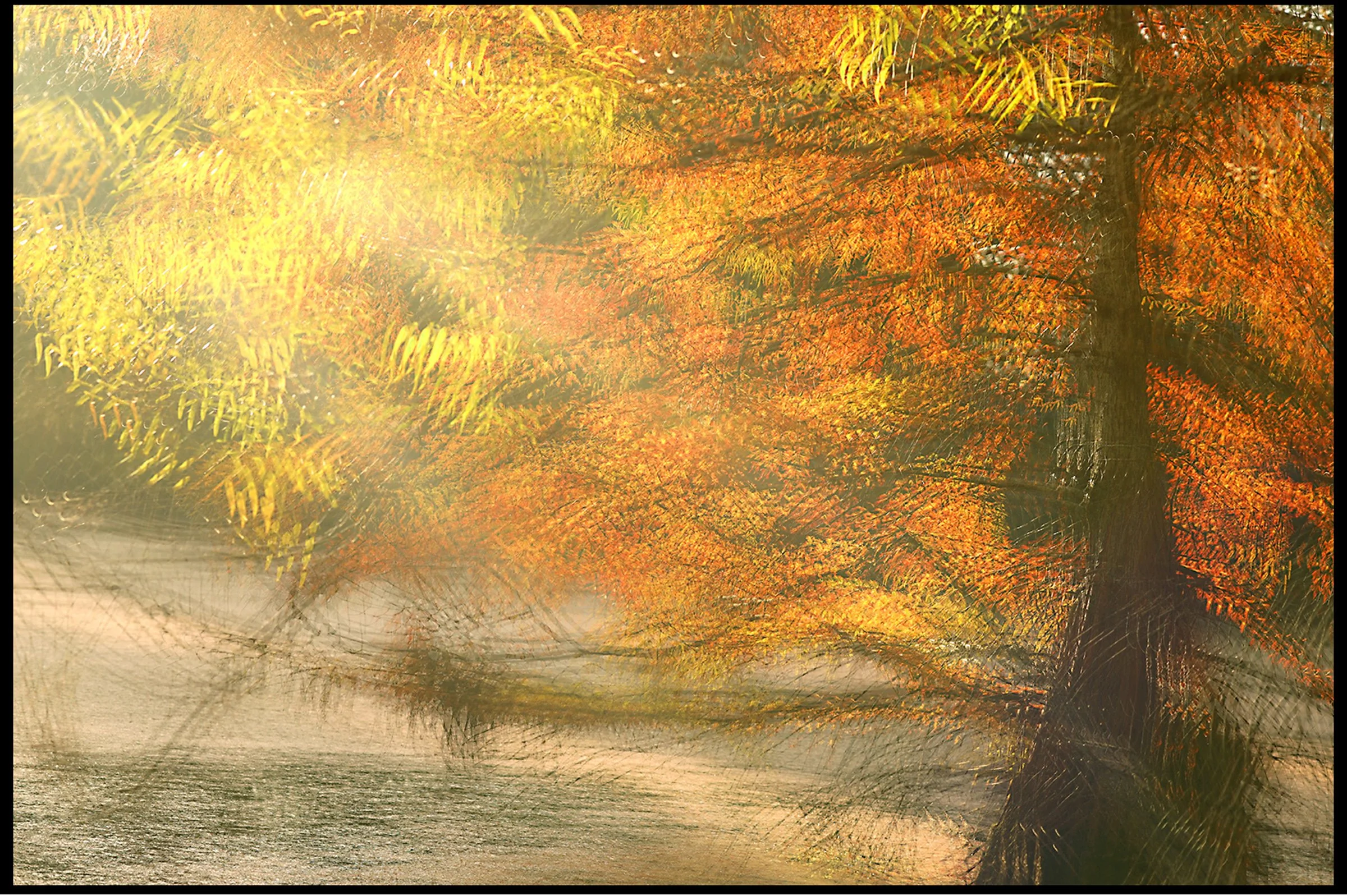
“Backlit Bald Cypress” This is a five-image multiple exposure from the Carolina Bay, Aiken, SC, November 2025
What I am calling “genre shaming” isn’t just confined to what many people think about the creation of horror. If every creative act is in some way autobiographical, what does it say, when the creator has to go out of their way to erase themselves so others will accept them and their works? We’ve all seen some version of this in other art forms. The comic that is told to settle down and be more serious. The painter that is told their medium of chose is just not what “real painters use.” The realistic artist that is told “Why should I look at your work, when I can just look out the window?” Then the abstract artist that is told, “I just don’t get it. Why don’t you create something that people can recognize?” In the photography world we see it when people say, “Why do you only take pretty pictures? Why don’t you photograph something meaningful.” But then photojournalists are accused of only sensationalizing the pain and suffering of others. Damn…
Do you have stories like these about encounters you’ve had with others and your chosen form of creation? Is it from well-meaning family and friends who say they are looking out for you? Is it the peers/mentors/teachers/gallery directors/publishers we look to for approval? Or is it the one or two “trolls” out there making snide comments that should mean nothing to us, but then mean everything to us? Did you, too, begin to erase yourself? Did the act of creating stop being fun, enjoyable, playful?
Did it start being like what Victor LaValle talked about in his essay? He was told over time that horror should be avoided and dismissed. He was able to get two “realistic”-type books published. But by the third, he “kept coming up with reasons to step away from the computer.” He slogged through for a bit, but he just stopped liking what he once loved to do. He said, “I’d lost my connection to the joy that had always been the battery in my back. Writing in and of itself didn’t bring me pleasure. Writing horror – that’s what made me glow.” When he started asking himself what he would need to add back into his life to get the “fire burning again”, the answer that came back to him was: Monsters.
October 2026
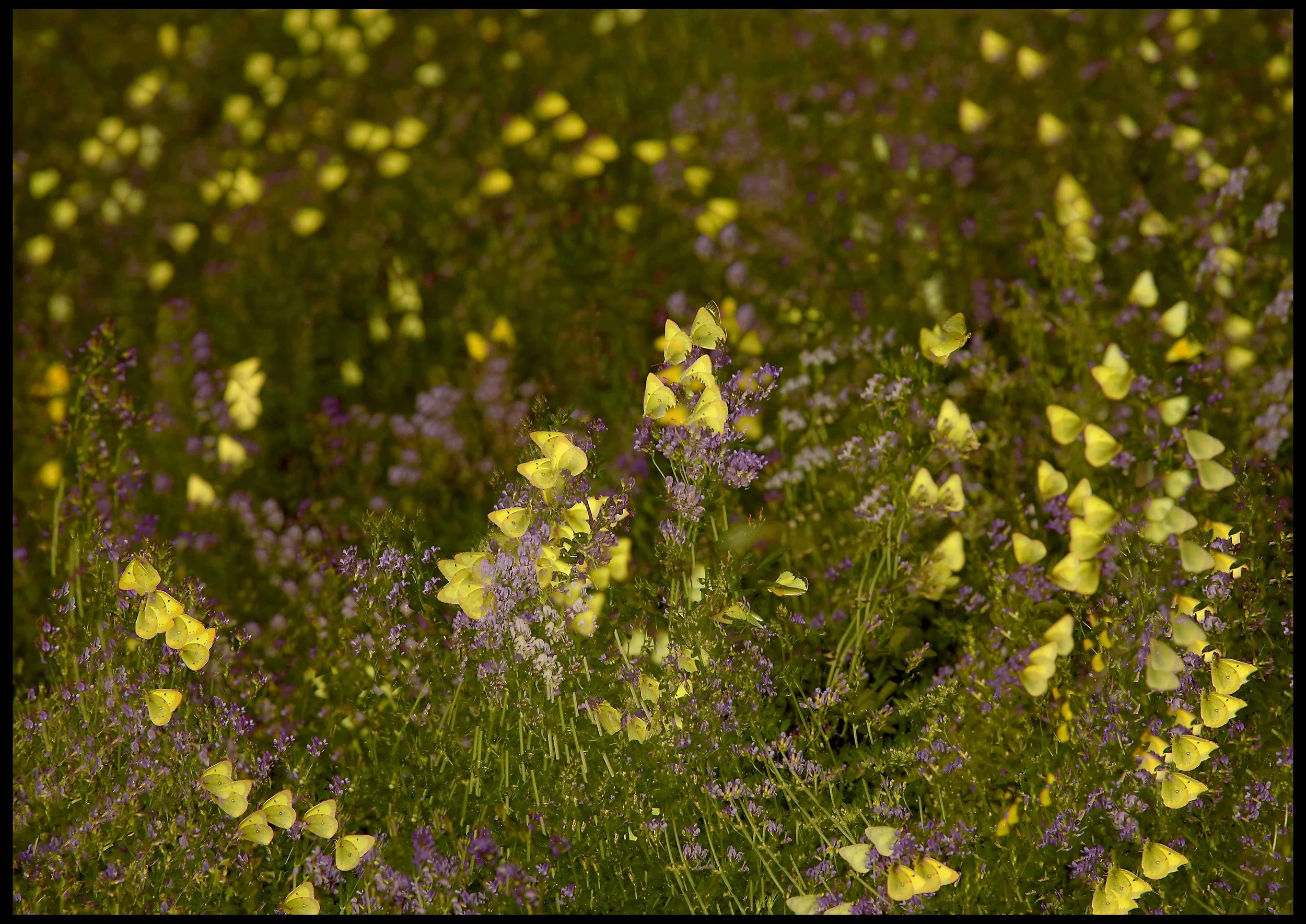
“A Cloud of Clouded Sulphur Butterflies” A seven-image, hand-held multiple exposure of butterflies in a field in Hinckley, Utah, September 2026
I think we have all had those times when the creativity doesn’t flow like it once did. What changed? Sometimes we just need a little break, a little recovery time, to settle our thoughts and then jump back in. Or could it be something else? Do we need to let the monsters back in, or kick them out of us? Did we start doing things the way others told us to do it? Or did we start doing things a certain way in a certain field so we can fit in and be successful?
Back to that question in “King Sorrow”: Would you sacrifice someone every year so you could have all the success you ever dreamed of? But… What if it was someone you knew dearly? Someone you knew intimately? Would you still do it? Have you realized yet, that the person you are likely to sacrifice for that type of “success” might actually be your younger self. The one who had the dreams to chase the way you wanted to chase them. The one who had a voice, who had a vision, who had that creative spark that was yours and yours alone. Would you sacrifice that younger you on a “dark alter of success”? Or would you keep fighting your own fight, to really show who you are?
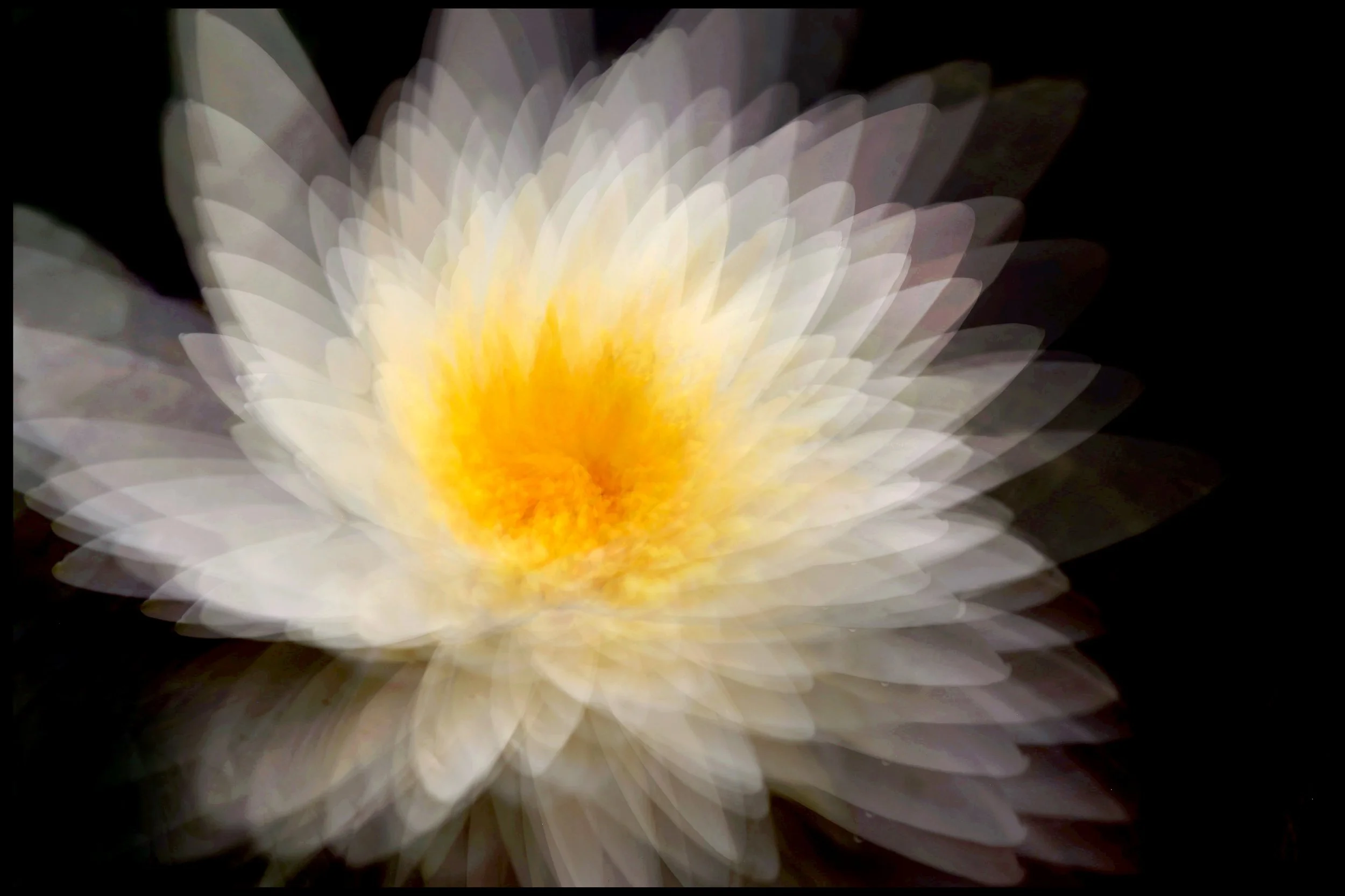
“Spiral Lily” A nine-image, hand-held multiple exposure of a lily in the Henderson Heritage Preserve, Aiken, SC, September 2026
(Alright, there has been a spider going back and forth on my desk and keyboard as I write. I finally got it in a box and took it outside. It will be OK in the rain, right? Now, where was I? Ah, yes…)
There are have always been horrific things happening in the world, and artists showing us they exist. People didn’t shame Hieronymus Bosh when he painted his “Garden of Earthly Delights”. With its Edan, Earth and Hell and the possible interpretation as a horrific morality story for his time. After being a Spanish court painter for years, Francisco Goya painted the horrors of the Peninsular War in his “Disasters of War” series. As well as the horrors of the Napoleonic firing squads of the time in his “The Third of May 1808.” Should we have told him to “Just cheer up, and paint something pretty”? There is Picasso’s “Guernica” that is very horrific, but no one is shaming him for his depiction of the German bombing of this Spanish town. There are the countless photographs of destruction and from disaster areas – both natural and manmade. We often criticize both the works and the creators, but without those images and stories, we would not know there are people, animals, plants, and a whole planet in need of our attention and help.
So, why is current horror that is written, filmed, photographed, sung, acted, painted, or otherwise created not worthy of this same consideration? Many of these creators see big problems in the outside world, and are often frightened of them as well as fighting their own internal monsters. Many of their acts of creation are to do their part to make sure others know about them. And that they are not alone in their struggles. As Tananarive Due wrote, “Fictional scares could serve as … a way to vanquish fictitious monsters in a way white supremacy could not be vanquished.”
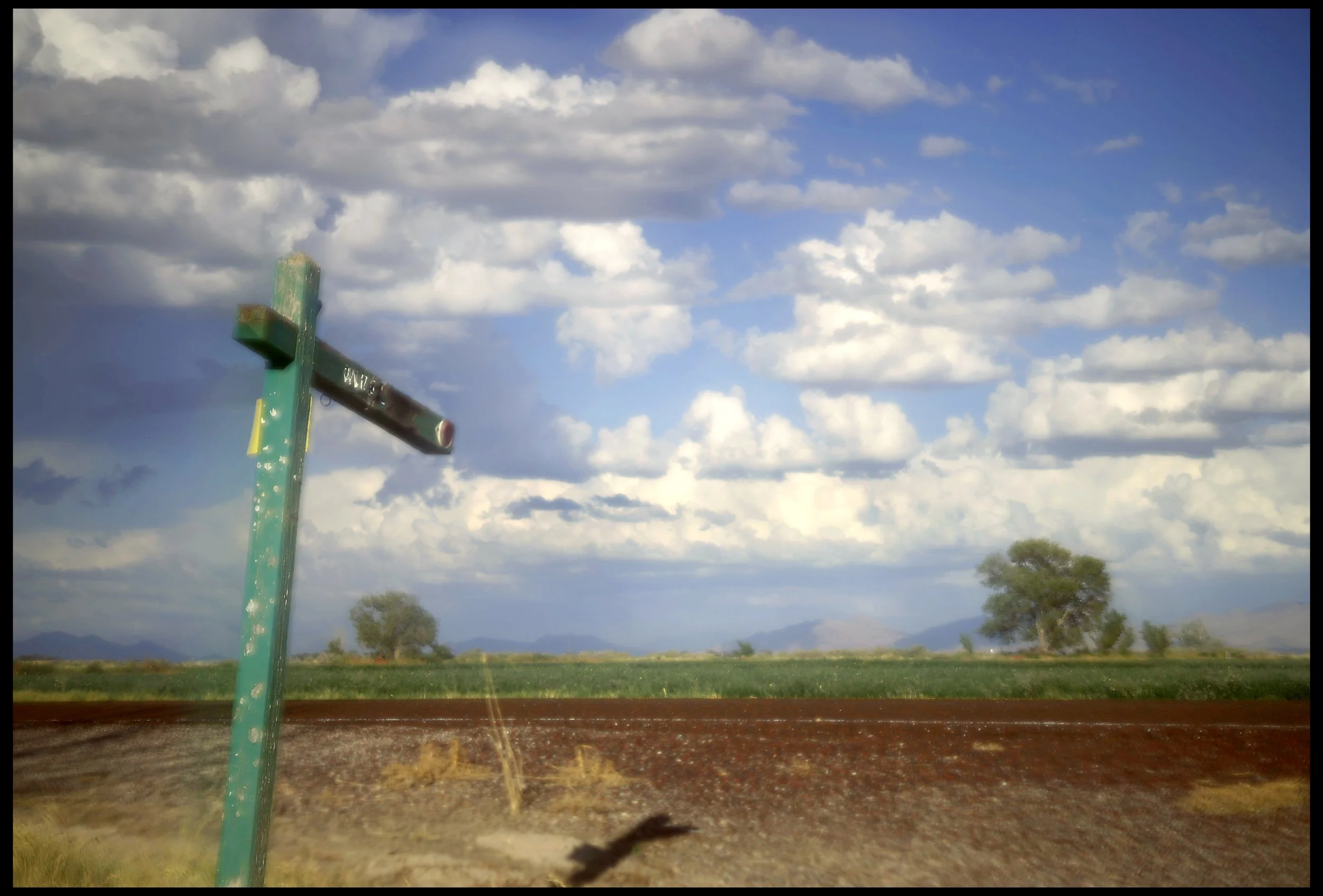
“Old Signpost and Clouds” This is a multi-frame Orton effect with five exposures from Hinckley, Utah, September 2026
What gets to be interesting about horror as I get to know it more, is those small sparks of light in the darkness that draw our eye. Those setbacks that keep coming at us, but we – the hero – keep getting up again and again to try once more. Those small victories that keep adding up to the final act when the entity/monster/evil is brought down for good – by good. And it seems so often that it’s that one character – that one ordinary person – that won’t give up, that drives the whole story. As Stephen Graham Jones (who won this year’s Stoker Award for best novel) writes, “I’d rather see a single small daisy out in a bleak, frozen landscape than a whole field of wildflowers thriving. To me that one daisy is a fighter, it’s a striver, it’s had to struggle so hard to be where it is.” He continues, “Even if it doesn’t make it through the winter, it tried, didn’t it? To me, that’s what horror is about: the trying the fighting, the hope.”
Isn’t that what all our lives are about? Isn’t that why we create what we create, the way we want to create it? Isn’t it all about trying something, fighting for it and, ultimately, hoping it will mean something?
So, my challenge this week is… (Oh, someone’s knocking instantly on the door now. Who can be out in this nasty weather? I hear my wife getting up to see who it is. I’ll go check and be right back…)
Thank you, and keep creating what you do.
Patrick Krohn