Perfect VS. Good: A Bias Towards Action
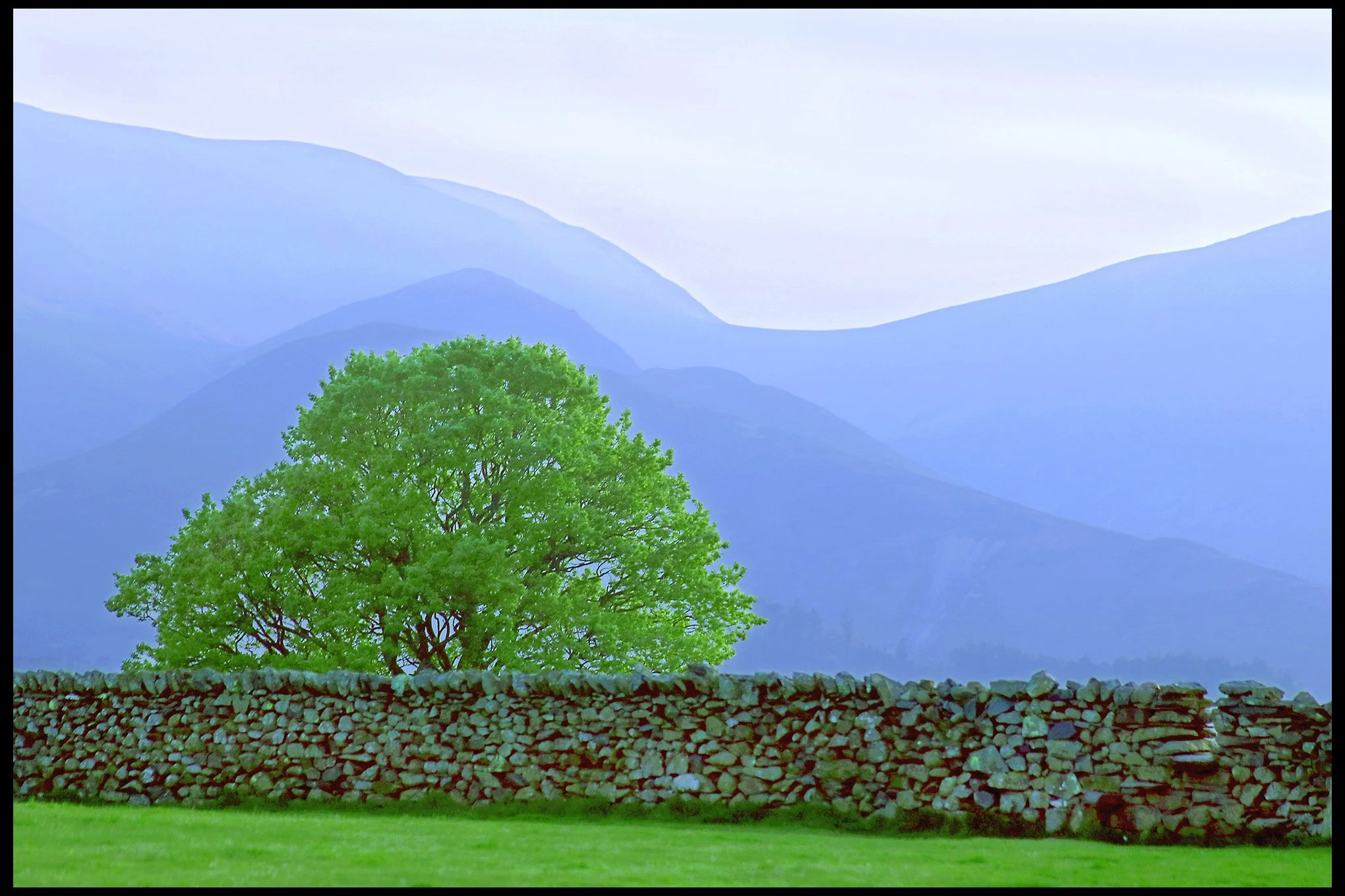
“Keswick at Dusk” Keswick, England May 2019
Hello Friend,
To me, there seem to be two main misconceptions about art and any creativity that are intertwined and have the same outcome: inaction. The first is that creativity comes out of nowhere, it can strike any time, but only to a chosen few. The second is people think art is only art if it’s done perfectly.
So, in the first case, people often feel they are not “creative” or a creative person because that spark or lightning has not hit them. Since they are sitting back waiting for “it” to happen, they never really get on with the creative process. Because the first step in the process is to, well, take that first step and get started. For me, this is what was holding me back for a while before getting back into photography – and even getting this blog going. When I was a photojournalist, I only thought of myself as somewhat creative. My assignments were given to me, and I would go out and make the best photos I could. Pretty straightforward, but the flaw for me was I waited for someone else to tell me what direction to go and basically what type of photo to make – news, feature, sports, etc. Even when I was told to “cruise for a feature photo”, someone else was giving me that “assignment.” Only a few times in my 10 years did I venture outside that dynamic and come up with my own photo projects.
Even though I bought my first digital camera at the end of 2016, from 2017 to 2019 I really didn’t do too much with it. I was still waiting for inspiration and/or “assignments” to come my way. The most common assignments were family trips and the annual photo shot with my daughter in our azaleas. Really not that different than most people who buy a camera. Two events in 2019 changed that for me – one big, one small.
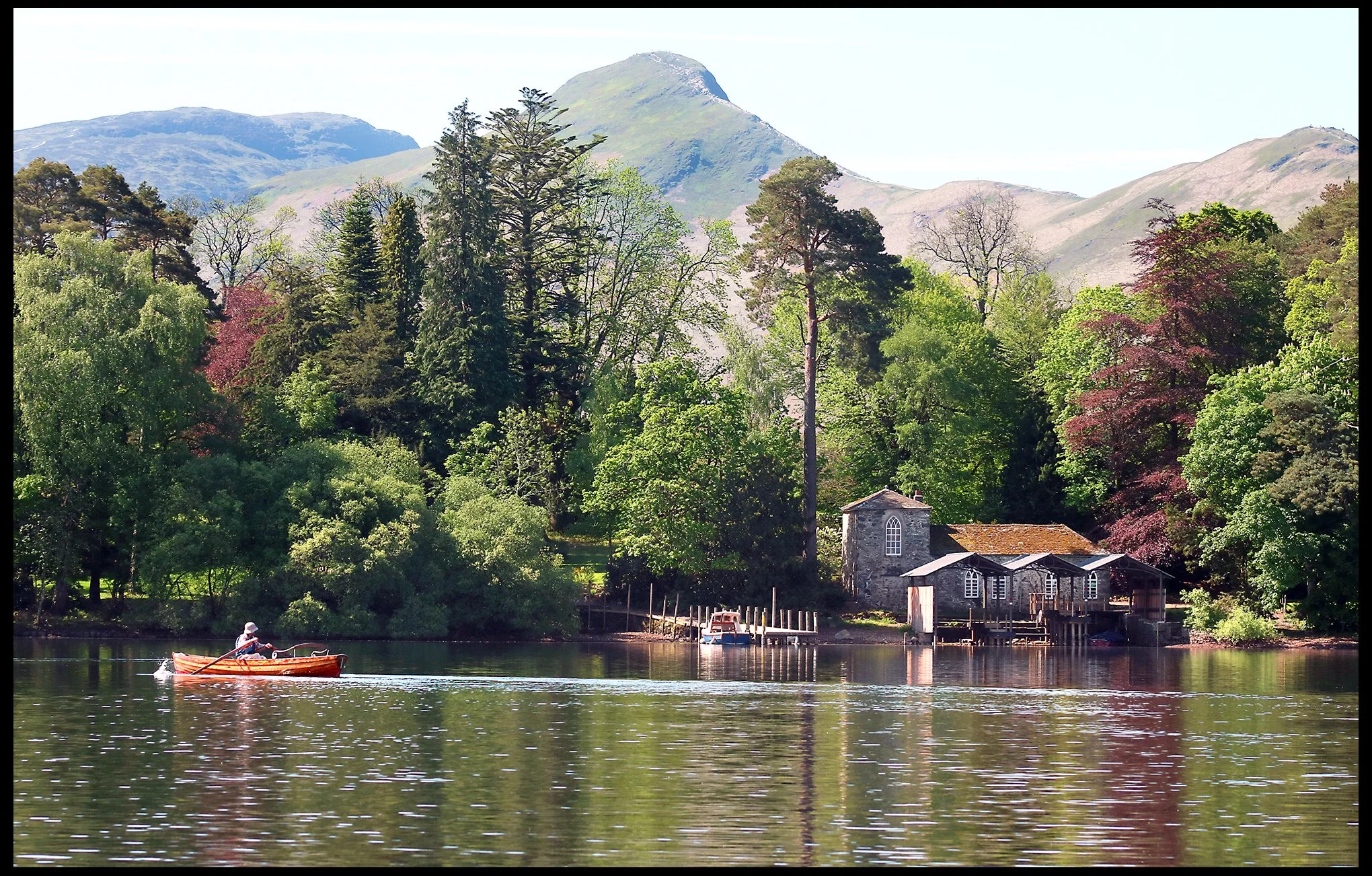
“Rower on Derwentwater ” Keswick, England May 2019
The big one was a family trip to England to visit our daughter studying in London. We went to the Lake District for a few days, and I was able to photograph around Keswick at the Castlerigg Stone Circle and the Derwentwater. I was so excited from being at the stone circle the first evening, that I was up at 4 AM local time to walk back there and photograph the sunrise. This was the “spark” that got me thinking more seriously about nature and landscape photography.
After coming back from the trip, I was excited to edit and post the photos. That lasted a few weeks. But then it hit me, since I live in South Carolina, and not likely to get back to the Lake District anytime soon, I didn’t have anything to be excited about to photograph. Thus, I wasn’t likely to be creative again until the next big trip. Again, similar to what most people with a camera think. It was around this time that the second, “smaller” event happened. I say smaller because it was just a few moments long, but it still has its impact on me today.
I was listening to the Rich Roll Podcast, and he had on photographer Chase Jarvis to talk about Chase’s new book “Creative Calling.” The whole conversation was eye opening for me. But it was when Chase said, “Don’t fake it ‘til you make it. Make it ‘til you make it.” Basically, saying faking anything won’t get you anywhere. If you are doing something, you are not faking it, you are making it as you are going along. This hit me hard. If I wanted to really “do photography”, I needed to be out and about making photos as much as possible – no matter where I was. And now, to work on my writing, I need to be writing.
What I hope you all get from this is: If there is something that is calling you, or is of interest to you, you can’t wait for inspiration, you have to go looking for it. Creativity is not out looking for you; you must be the one stalking it. Because creativity is only found when you are actively looking for it. To do that, just get started.
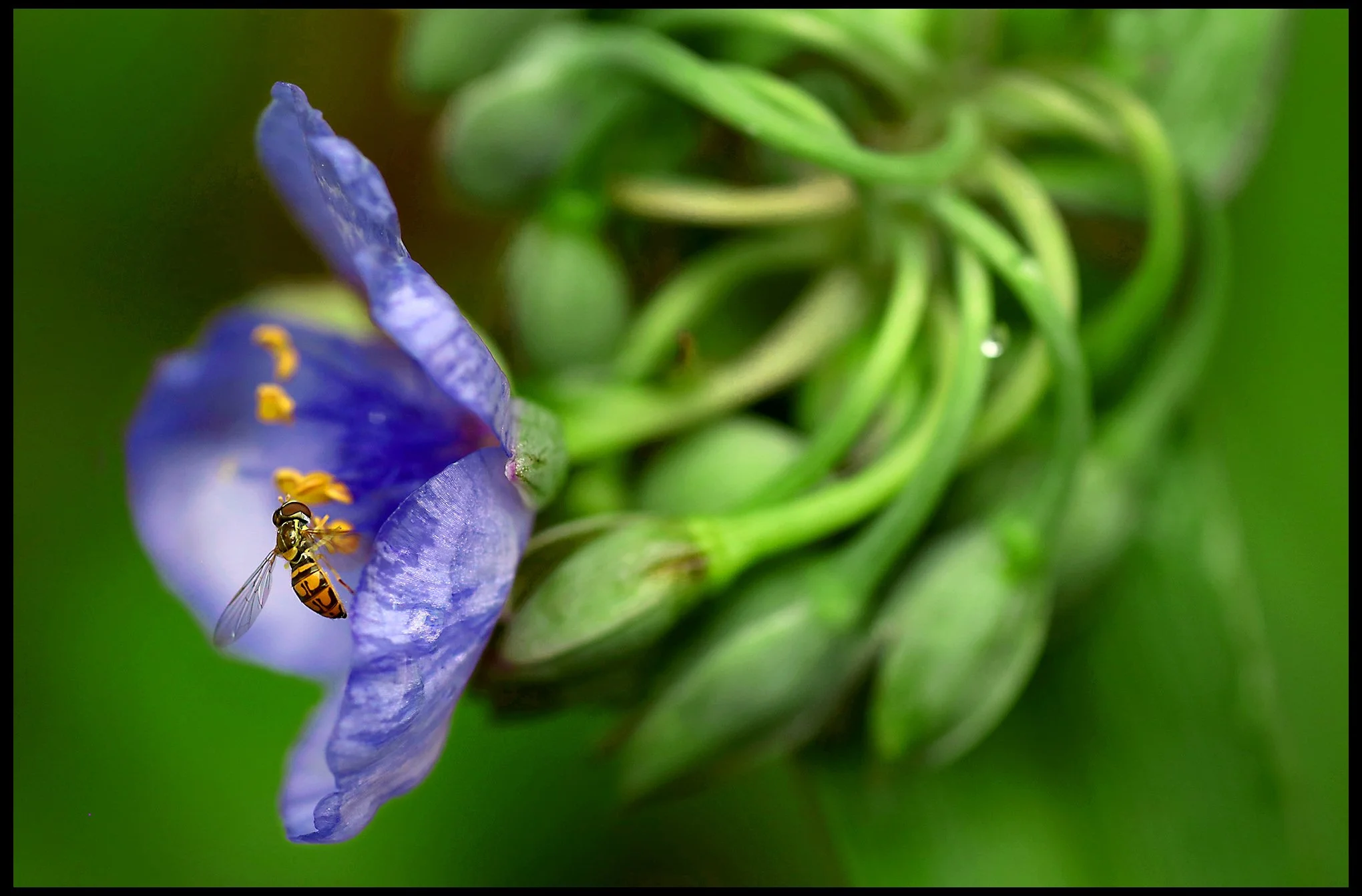
“Pollinating Purple Spiderwort” Aiken, SC May 2025
Even when we try to get started, the other issue comes up: perfectionism. We look around us at the great works of art – even the not so great on our social media feed – and tell ourselves those pieces are great because they are perfect. Since we can never create something that perfect, or that well-crafted, we should not share our work with others, or worse yet, not even try.
In the book “Art & Fear” the authors David Bayles and Ted Orland have a telling story about perfectionism. The quick version here is they knew a ceramics teacher that divides the class into two group. One group will be graded on the total volume of work – regardless of the quality – and the other group will have all term to make just one piece as best as they can. What do you think happened by the end of the term? Did the group that had all the time to make one work create a masterpiece? Did the volume group just make a bunch of ugly works just to get a higher volume grade? Actually, the “perfect” group got bogged down trying to be perfect and got too stuck in their own heads. When it was time to start making their work, they feared they would do something wrong, so they really didn’t do much of anything. While the volume group actually produced the best work, and a lot of it. This was because they also made a lot of really bad work, but they were able to learn from it and could see new possibilities from each attempt.
I was driving with my daughter a couple of years back, and the idea of perfectionism came up. She said I was a perfectionist. My reply to her was, “you do see the huge volume of crap I produce, right? What perfectionist would do all that?” Yes, I would like all that volume of crap to be as good looking as possible. The key is, I am learn while creating that volume of work. I see how things might be close to what I want, and file it away in my head to learn from when the opportunity comes around again. This is one of the main reasons I photograph so much just in my yard. It’s handy; I can practice a lot, and I can fail a lot. Also, at some point I do put it out in the world, even if I don’t think it’s completely ready. (See my other bogs about failure and about abandoning your work.) I don’t wait for perfect; I try to go with good enough at that moment.
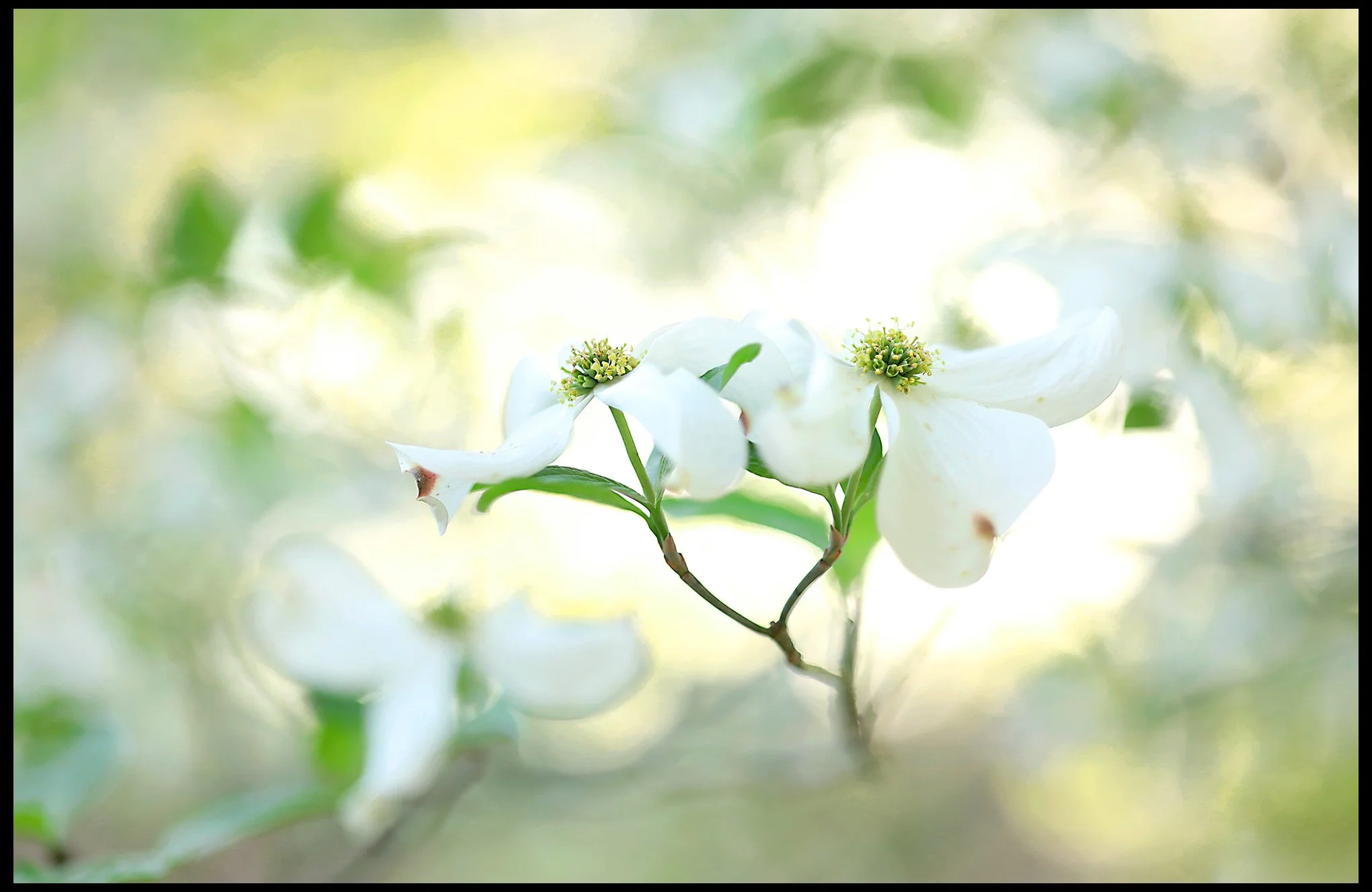
“Dogwood at Down” Aiken, SC March 2026
Most of us have likely seen the Henri Cartier-Bresson quote, “Your first 1,000 photographs are your worst.” (Now with digital, I think we can up this to 10,000.) The idea Cartier-Bresson was going after was you need to be out there starting and making some bad things, so you can learn from them. Otherwise, you won’t get to the point when you can create something better. The beauty of this quote is it doesn’t have to be about photography. Pick any art or creative endeavor, and it’s the same. We start off making really bad stuff, that gets slightly better over time, and at some point actually even gets good.
And here I am again, back to the idea of just getting started. The great thing about getting started sooner and not waiting, is you are that much closer to making your good stuff. As you are making things, you are learning more about what you are doing and what you enjoy in the process and what makes you happy in the final work. Looking at the greats in any field, and we can always find some type of flaw in their works. (Most likely, they would be the first to point them out.) The flaws are what often make some of the works great. The “accident” that suddenly took the work in a whole new direction. That chance event that opened their eyes in a new way. Though, those works would not have gotten done at all if they hadn’t gotten started.
We don’t need to look for perfect in ourselves or our work to make good and meaningful work for ourselves. Just get started on something, and see what happens. So, my challenge this week is to just start something you have been holding back on. Then put it out in the world. And then you will see you can do it again tomorrow, because the world did not collapse around you when you did not produce something perfectly.
Thank you and keep creating what you do.
Patrick Krohn
April 2026
P.S. Right after I finished writing this, I happened to be reading Matt Payne’s new book “The Colorado Way” and his chapter 11 on “Perfection”. He has some great stories about this in his life. And even better, he has some action plans for dealing with perfectionism. Two of his ideas fit “perfectly” into what I wrote for today:
Take Imperfect Action:
Start before you feel fully ready, knowing that adjustments can be made along the way.
Understand that doing something imperfectly is better than not doing it at all.