
To Be a Master of the Basics
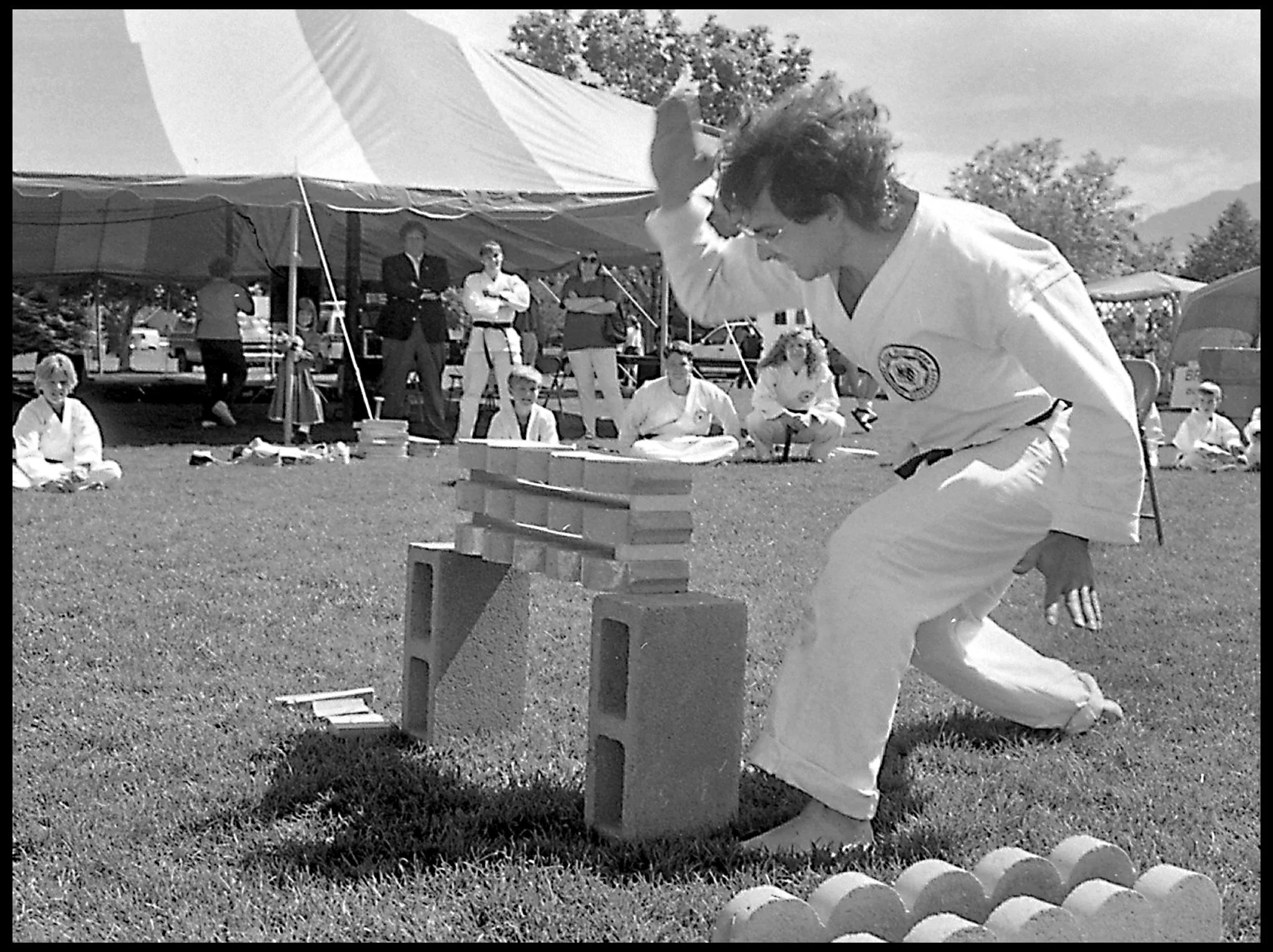
Me attempting to break three edging bricks during a Tae Kwon Do demo in Orem, Utah, June 1994
Hello Friend,
Not long after I moved to Utah in 1991, I started martial arts. I had photographed the owner of local studio for an assignment. I connected with him as we talked after I got the photo, and he invited me to come and give it a try. After years and years of watching karate movies and the TV show “Kung Fu”, I’m sure I was like almost everyone else as they walk into their first class. It looks like so much fun to kick and punch and throw people around. And it’s gotta be easy to learn, because the movies make it look soooo effortless. Right? Nope!
Even though I was always pretty athletic growing up, I quickly learned there were some young kids there who could take me on easily. Why? Because they had something I didn’t have at that point: years of experience doing it. And I was under the impression it didn’t take much to get a black belt since it seems like so many people have them. I did learn this was wrong, but also kinda right. I did learn it takes a lot of time and effort to earn a black belt. Depending on the system you are in and the amount of time you put towards it, a black belt can take a few years to decades – I knew a few people who came back after many years to try it again and succeed.
But what is a black belt, and what does it mean to earn one? And why am I bringing it up here? In almost all martial arts systems a first degree (or 1st Dan) black belt means – drumroll please – “A master of the basics.” That’s it. You have demonstrated you can punch, kick, block, throw, do the katas … all the basic stuff correctly and properly. Years of effort, sweet, tears, bruises and sometimes blood, and I was finally able to call myself a master of the basics. That’s it?! Shouldn’t I be able to fly now? Or at least leap over tall buildings with a single “Kia!”? Shouldn’t I be able to unlock the mysteries of the universe? Actually, this one is getting kinda close. You see, there is a saying in martial arts, earning your black belt isn’t the end of the journey, because the real learning can now start.
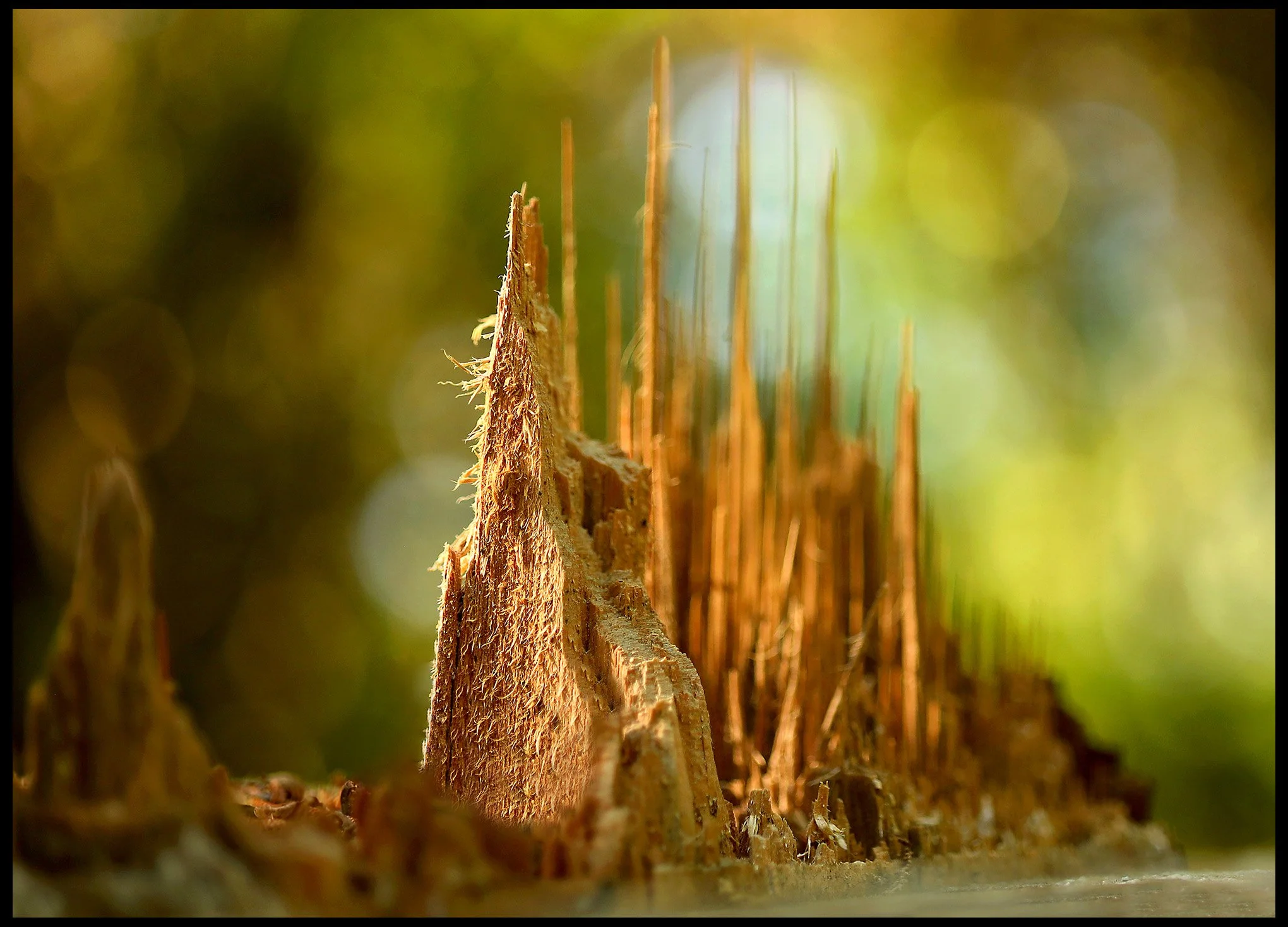
“City at Dawn Aiken, SC, April 2025
So, this opens up two themes I would like to explore: mastering the basics and continuing to learn. In all creative endeavors, most of the people new to it think their “elders” (in quotes, because sometimes your elders might be younger than you) have been doing it wrong and they will show them. You can almost hear them saying, “They took years, I can do it in months. I don’t need to learn the basics. I’ve got it all figured out.” Most people like this will keep banging their head against the creative wall until they figure out the basics do matter. Then they will either give up to go onto the next thing or they will start paying attention to the basics.
In photography, I think the main basics are ISO, shutter speed, aperture, depth of field and lenses. In painting it’s learning the different paint mediums, colors and mediums to paint on. Pottery, things like the clay types, the right speed for your wheel and the pressure of your hands. Music, it’s all about rhythm, melody, harmony and scales. Writing it’s about nouns, verbs, adverbs, and sentence structure. I hope you get the idea. Most of us have been doing our creative endeavors for a while now, and often forget how the basics play such an important part of what we do create. Are there ones in your field that you need to stop a moment and remember how they play a part in your creations? I think this is one of the reasons I like to teach, it allows me to keep going back to the basics and reminding me how they play a roll in everything I make.
In the creative world there aren’t different colored belts to obtain to track your progress. And, unless you go to an art school at some point and earn a BFA or MFA or something like it, we don’t have a system any more that gives you an idea when you have become that master of the basics. Maybe you start getting more complements about your work. You get more likes, more followers, your work starts to sell, others want to collaborate with you. But is that really the best gauge of your work and your progress? There were serious flaws in the “old world” guild system, but at least there was a way to know when you “made it.” In that system, an apprentice or journeyman in a craft/art needed to produce a number of high-level works for the guild masters to judge. If they were good enough, they were considered “masterpieces” that showed the person (yes, usually a man) could now call themselves a “master.”
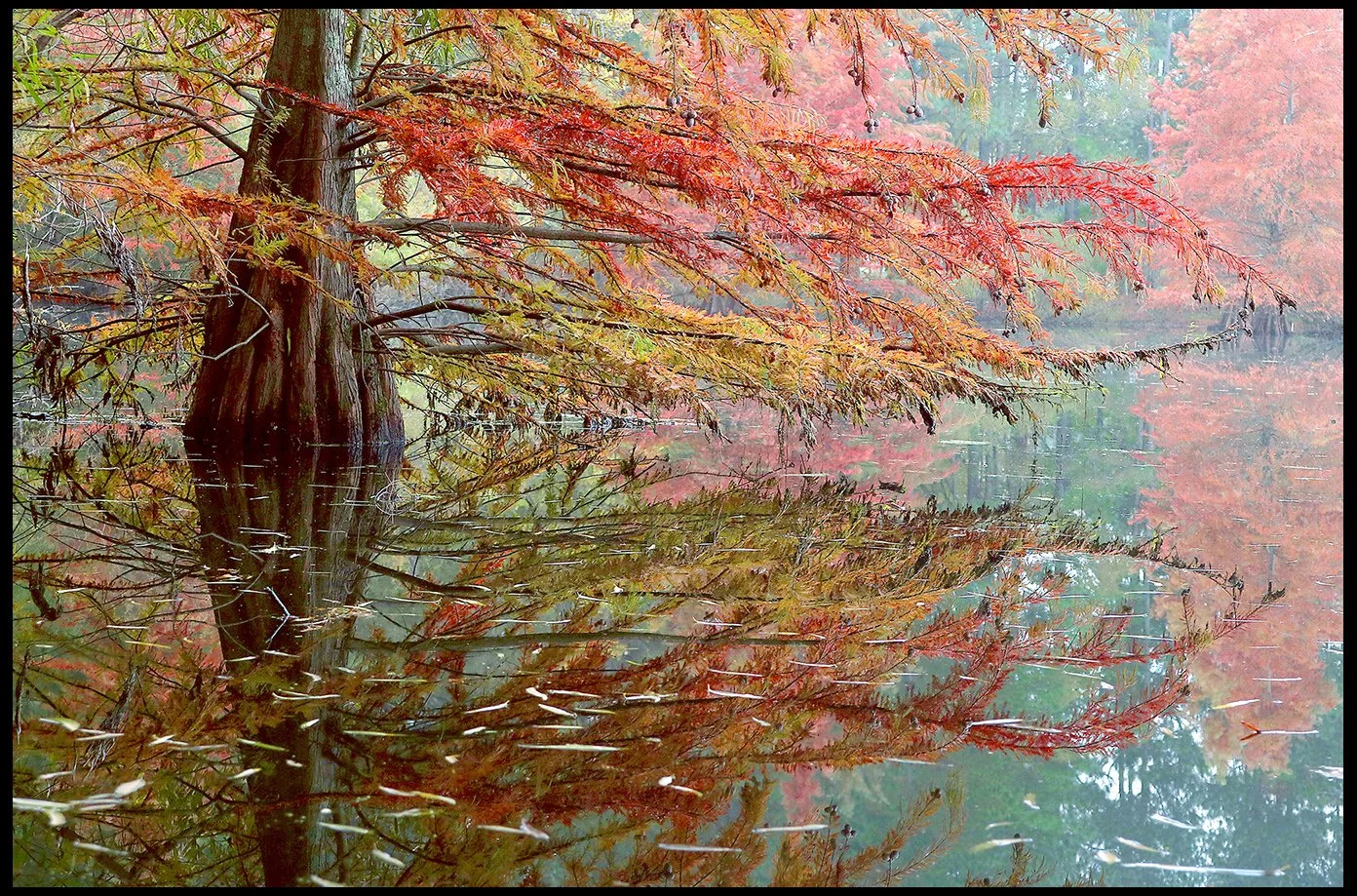
“Bald Cypress in the Fall” Aiken, SC, November 2019. The first photo I created that let me think I could actually be a landscape photographer.
We currently call something a “masterpiece” when the work is done so well there is no denying it was done masterfully. Though, it doesn’t mean the creator is a master of the basics of their field, just that the piece in question is exceptional. Even though there isn’t usually a body of people anymore to bestow the title of masterpiece, I think when we hear something called that, we do notice who those people are. Are they the top people in that field? The well-known critics of that or a related field? Or is it everyday people who see the beauty in the work, though are they not necessarily “qualified” to give that classification? I do think this is partly the reason for the rise in so many contests – besides as a potential money-making venture for the organizers. I see an explosion of contests just in the photo world. There are many people that are looking for that validation that what they are creating is of a high quality, or at least what others in the field consider high quality.
When you all look over your creative career to date, are there works that you consider your “masterpieces”. Those that demonstrate your mastery of your field? I kinda look at some of my works this way. Though, I also think of them the way Beth Buelow does on her “Pixels” podcast, as pivotal images in a career. I love that she calls them “Pivot Pixels”, because they are the images that individually or as a group show the growth in an artist’s creative journey. Some people have a difficult time pulling specific images, and see more of their growth as a change over time. For me, I can point to about five or so images of mine that I think of as my “masterpieces.” They are the images that I believe are both demonstrations of my mastery of my craft, as well as pivotal points in my artist development.
I’m throwing in here my “Bald Cypress in the Fall”, because that was the fist image I really made that let me know I could maybe be a landscape photographer. So, I have always considered it my “masterpiece” in more of the old guild system classification as well as a “Pivot Pixel” the way Beth talks about them. Some of the others are early on as I was learning/exploring a new technique, and some took years before I made the one I consider the best. If you are now thinking back on your development, are there works that come to mind as your own masterpieces? Those works that really help you define your creative journey? Or do you see yourself as making a steady progression of improvement? Neither is better, just different ways of marking your own growth.

“Dreaming Cypress” Aiken, SC, November 2025. Not that I see this as my best use of multiple exposure, though more as a demonstration of my expanding skills and my changing views of this tree.
As I start this writing venture, I don’t see it as any one work standing out, but as that slow progression of improvement – I hope. As any master in any field will tell the newbies, “Practice is the best practice”. As well as “Progress not perfection”. Part of that practice for me is doing this weekly for now. (That could change, but that’s the goal.) As a photojournalist, I photographed every day. For the first three or so years in landscape, I did about the same. Besides the weekly practice, one of the ways I hope to get better at writing is to read more about the craft of writing. I plan to reread Stephen King’s “On Writing”, and Steven Pressfield’s “Nobody Want’s to Read Your Sh*t”, and his “War of Art.” My sister Mary, who is a wonderful writer, recommended Anne Lamott’s book “Bird by Bird”. I just got it from the library and will it start this week. There are a few others I know I’ll dig into, though other recommendations are welcome.
To wrap this up, what I learned as a martial artist, very much pertains to any other creative endeavor: we need to master the basics before we can create those master works. It may seem boring and unnecessary, but the real learning and exploration can only happen after that. Looking back at those that were finally able to be called “masters of their craft”, they did not stop. Getting that designation was only the next step in their creative careers. My challenge to all of us is to take a step back and acknowledge the basics that got us where we are, so we can make those next leaps.
Thank you and keep creating what you do.
Patrick Krohn
May 2026
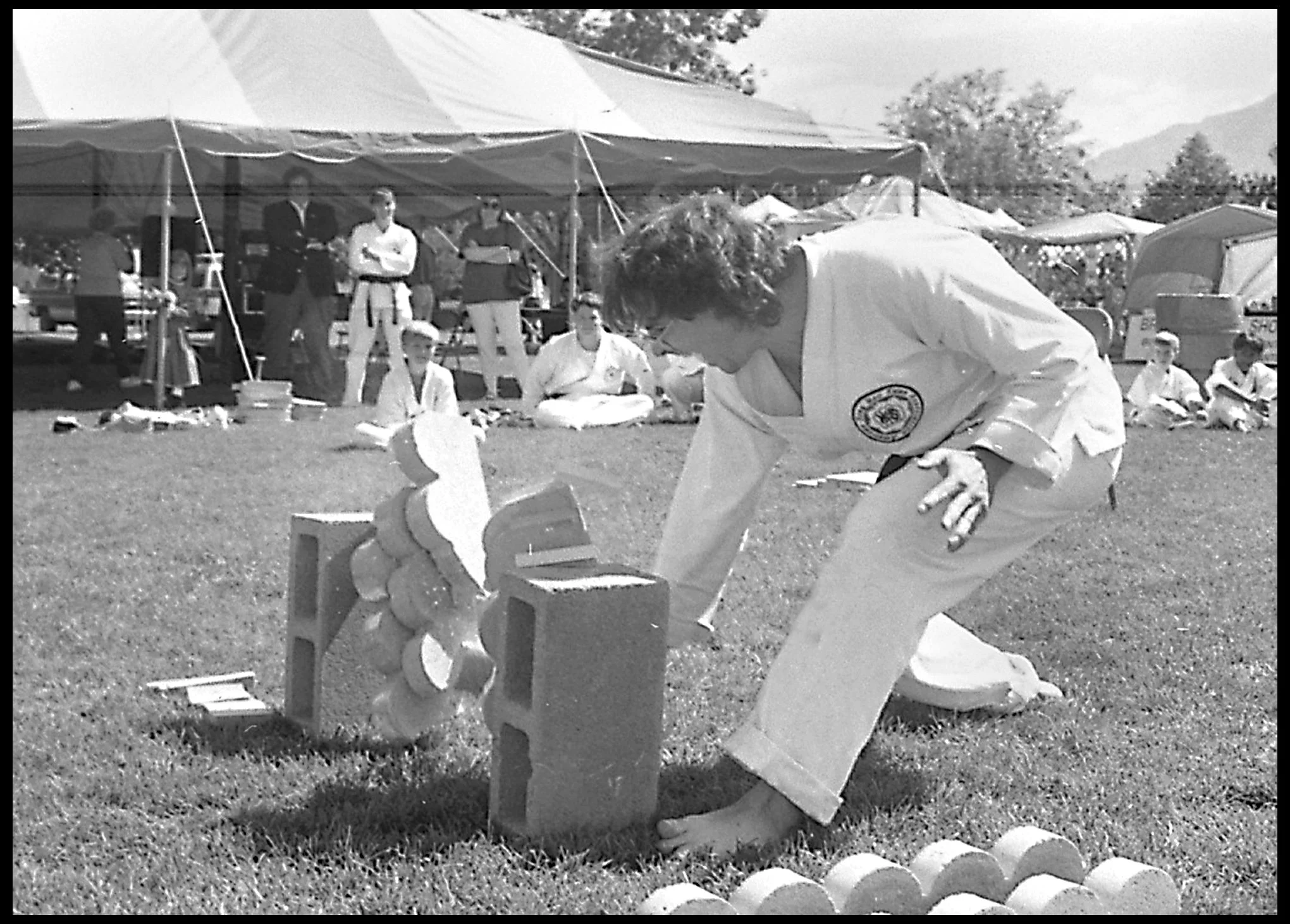
Me breaking the three edging bricks during a Tae Kwon Do demo in Orem, Utah, June 1994. I only got a scratch on my hand.
P.S. I did earn my black belt in Song Moo Kwan Tae Kwon Do in 1993, but did not earn my second degree that I was working for. I continued to learn and teach at the studio until I moved from Utah in early 1996. Around that same time, I had a falling out with my teacher’s teacher. And maybe that was for the best; since years later, when I doing a little digging, I found out he had gone to federal prison for fraud. I tried to do other martial arts over the years, but the struggles that produced the magic and joy of those years in the 1990’s were not there again. Though, the importance of the basics is still a part of me and my journey.