
You Can’t Live at the Summit Part 1
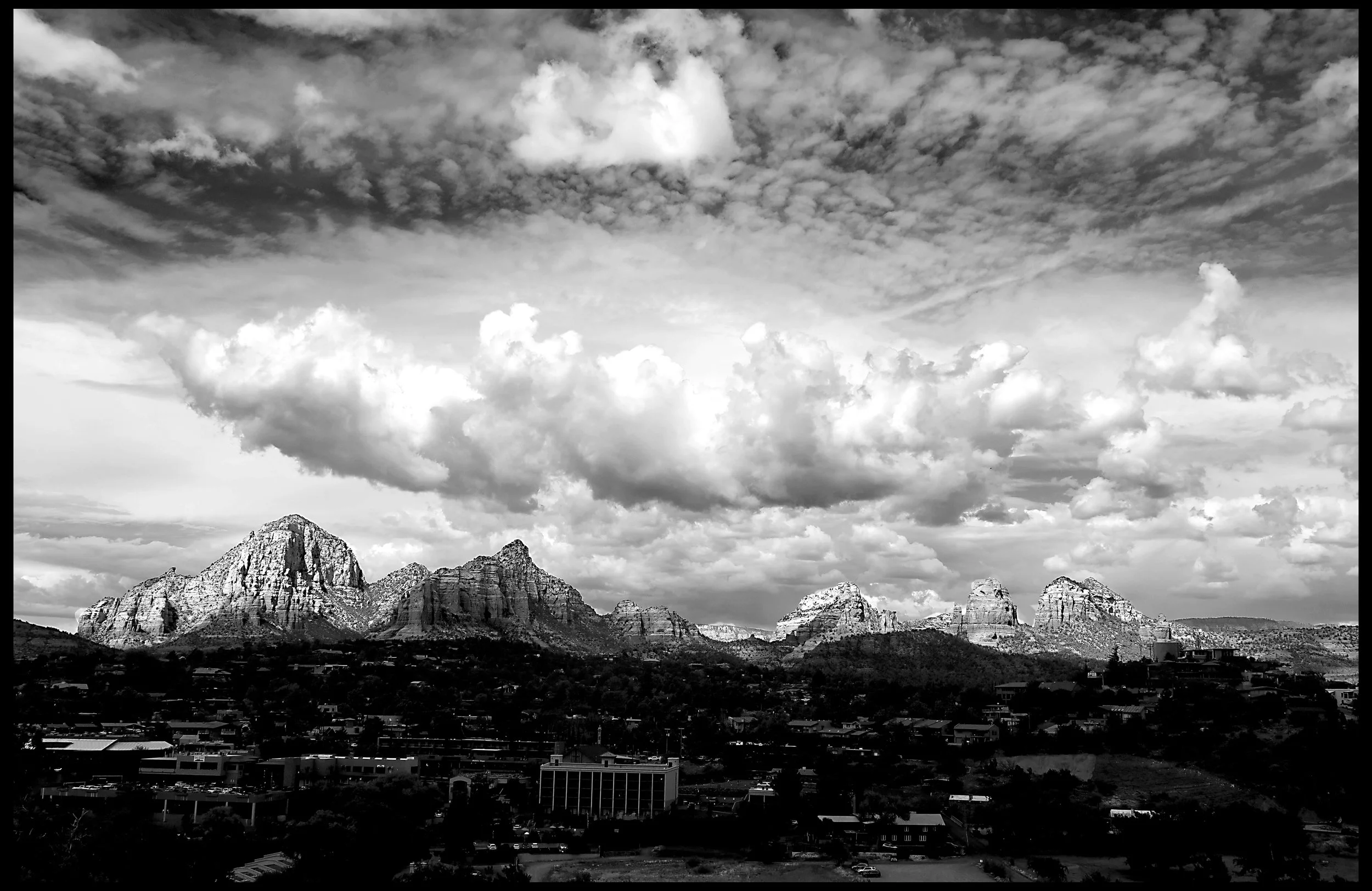
View from the Munds Wagon Trail looking west over Sedona, AZ, towards Capital Butte on the far left, September 2026.
Hello Friend,
Even though I loved living in and revisiting the mountains of Montana and Utah, most of my life I have been a “flat-lander.” Though, even while living in these places, I didn’t adventure to the tops of many of the mountains. Since living here in South Carolina for a couple of decades, and camping at the parks in the Upstate, I still don’t venture to the tops of many mountains. And when I do, it’s usually with my wife on well-worn paths with a bunch of others doing the same thing. Mostly we are more interested in hiking along streams and rivers to get to waterfalls.
I think the most adventurous I ever got was being in the “Outdoor Club” in high school. We hiked small sections of the Appalachian Trail. We kayaked a few rivers in New Jersey and Pennsylvania. And the most daring thing I think I ever did was climb in the Shawangunk Mountains (The Gunks) in New York state. I did climb up and then repel down one of the 150-foot rock faces. Really, that’s about it as far as high-stakes, wilderness adventures.
So, I was really intrigued and excited to get my own copy of Matt Payne’s new book “The Colorado Way.” I knew the photos would be very cool, and I also knew he was going to write about his recent adventure of his 35-days doing a thru-hike of the 500-mile Colorado Trail. He also wrote about the lessons he learned while doing his years-long project to climb the top 100 peaks of the state. All stuff that is way beyond anything I had done, and way beyond even what most people think they would be capable of doing. So, we all get to live vicariously through this modern-day adventurer by looking at all of his spectacular photos and reading his thoughtful essays.
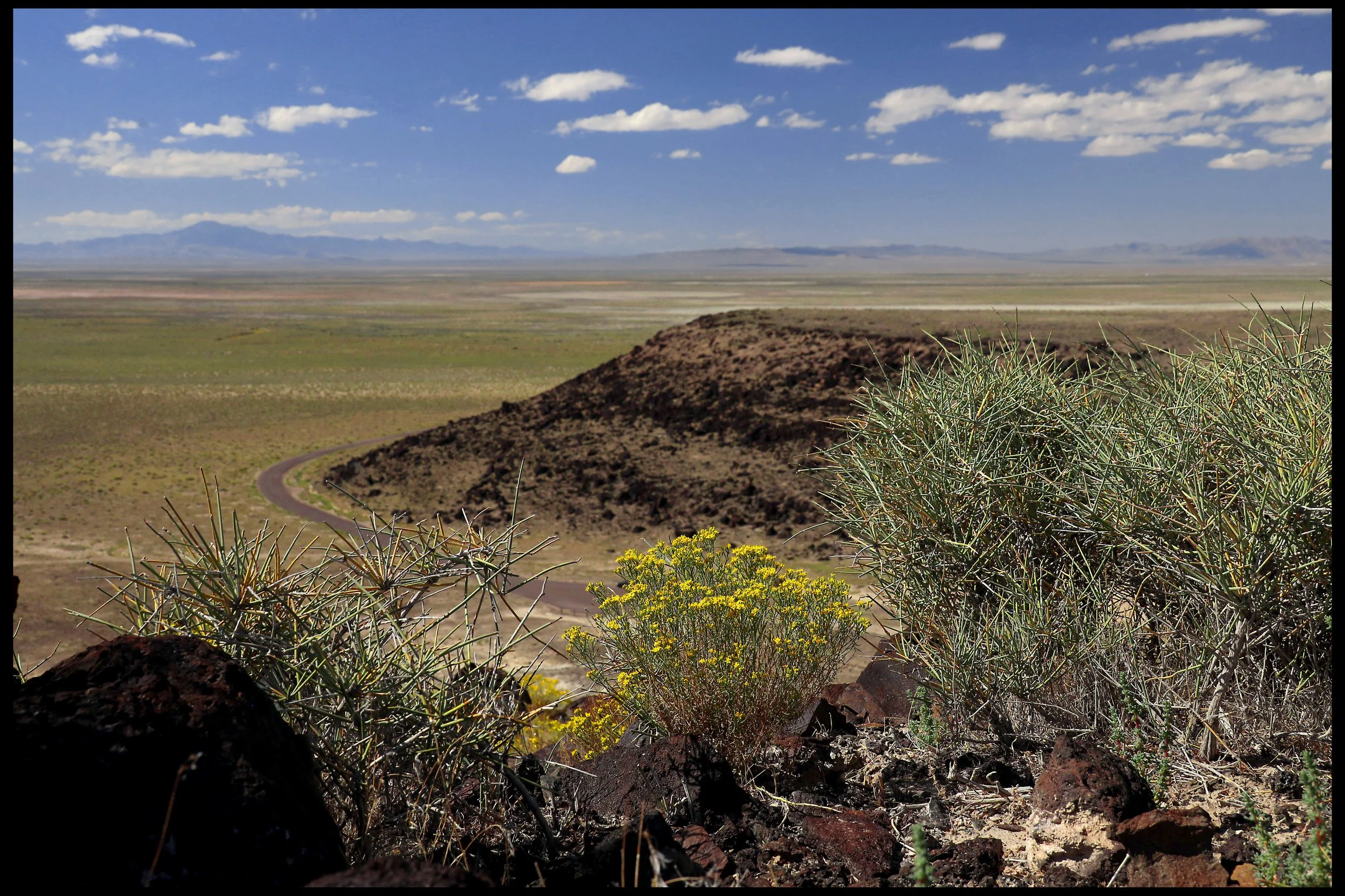
View from near the top of the hike near “The Great Stone Face” in Millard County, Utah, September 2026.
During the weeks I spend working my way through the book, I kept noticing how the only human things I could see in many of these vast photos were maybe the handful of people he was climbing with. Huge vista, with mile after mile of mountains and sky – but no people, no structures. No one lives in these types of places. (Thankfully, because almost all of these types of places are part of national and state parks – for now…) But what kept coming up in my mind was that Matt and anyone else who sets out to summit mountains, don’t stay there for long.
Depending on the condition at the time, they might stay for a few minutes or even a few hours. Some might even make camp close to a summit for a day. But that’s about it. You set your goal to conquer it, you do it, and that’s it. No one actually lives at the summit of the mountain.
This is something that kept having me sit back from the book and getting my thoughts really going. People talk and write about all the adventures of planning, hiking and getting to the top of the mountain. But no one stays there for long. Then the thought struck me, and the title of this post came into being: “You Can’t Live at the Summit.” At some point, even with all the feelings of accomplishment, and joy with reaching the top, we need to make our way back down again. And it was this next thought that really got me: no one really ever talks about the decent after the summit. In almost all the adventure books we’ve read, all the stories about some big life goal, 95% of the writing and telling is about the planning and the doing to accomplish the goal. Then so many of them end with, “And then we turn around and went home. The End.”
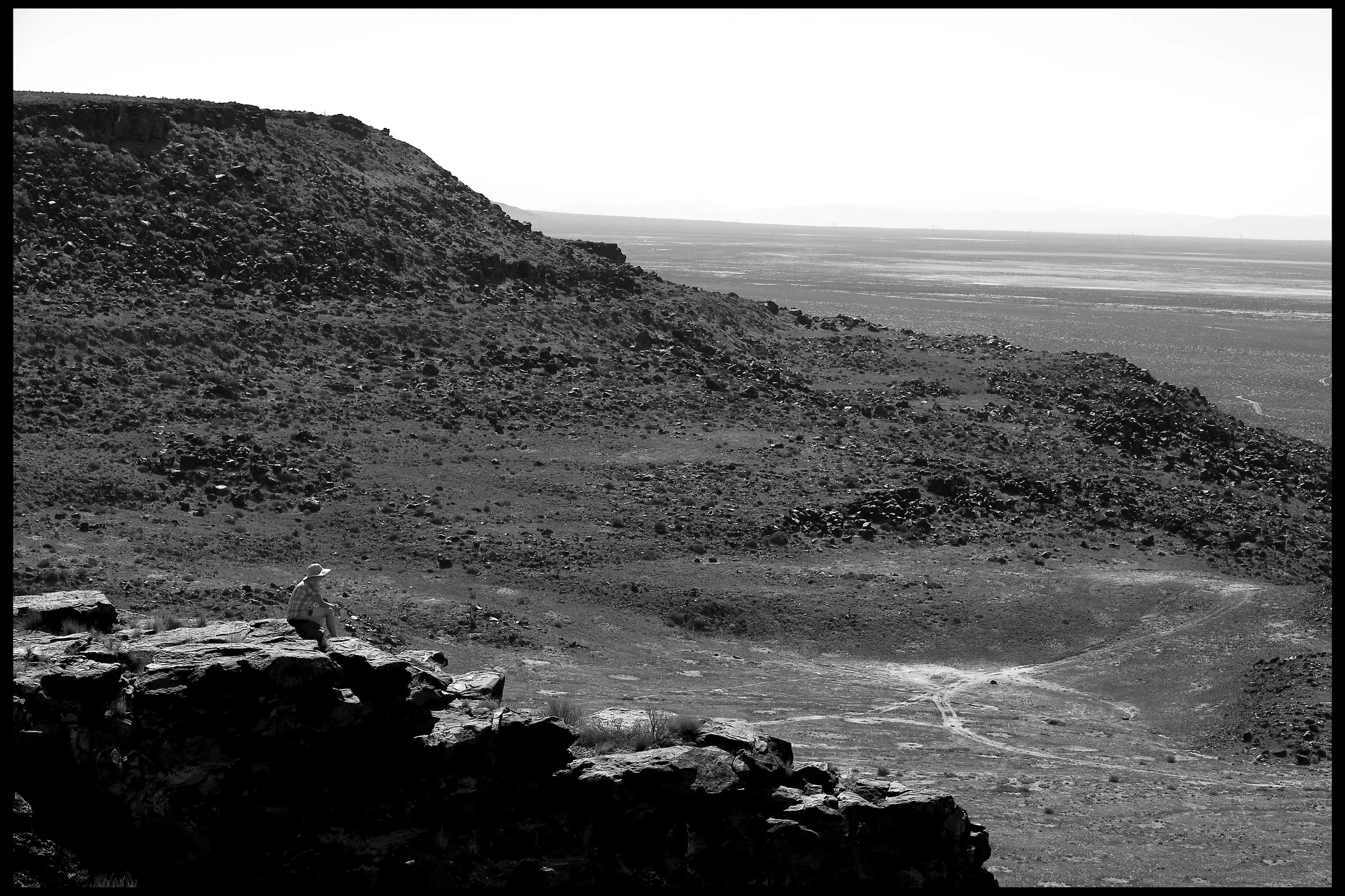
My wife, Marcy, lower left, enjoys the view after reaching the top of the hike around “The Great Stone Face” in Millard County, Utah, September 2026.
So, we get this sense over and over and over again, that it’s conquering and achieving that is the end in itself. The goal is, well, the only goal. As I was looking for quotes and sayings about mountains for this post, almost all of them were about what it takes to get to the summit. What it takes to get to your goals. But I did not find one where the person said something like, “And then we got to the top, made a home there, and lived happily ever after. The End” How could they? Do you think you would want to live at the summit of a mountain? I’m not talking about having a house on the tallest hill in town. I’m talking about would you want to live on the top of a real mountain?
Why don’t people live at the tops of the mountains? Mountains are not hospitable places. There is a reason anything above 8,000 meters (about 26,250 feet) is called the “Death Zone”. You just can’t live that high; you can’t just stay at the peak your whole life. And I think this is part of some of the biggest issues with why people have such let downs after the goal is reached. We are constantly told to go for the next goal, reach for the next peak, go, go, go. Always upwards.
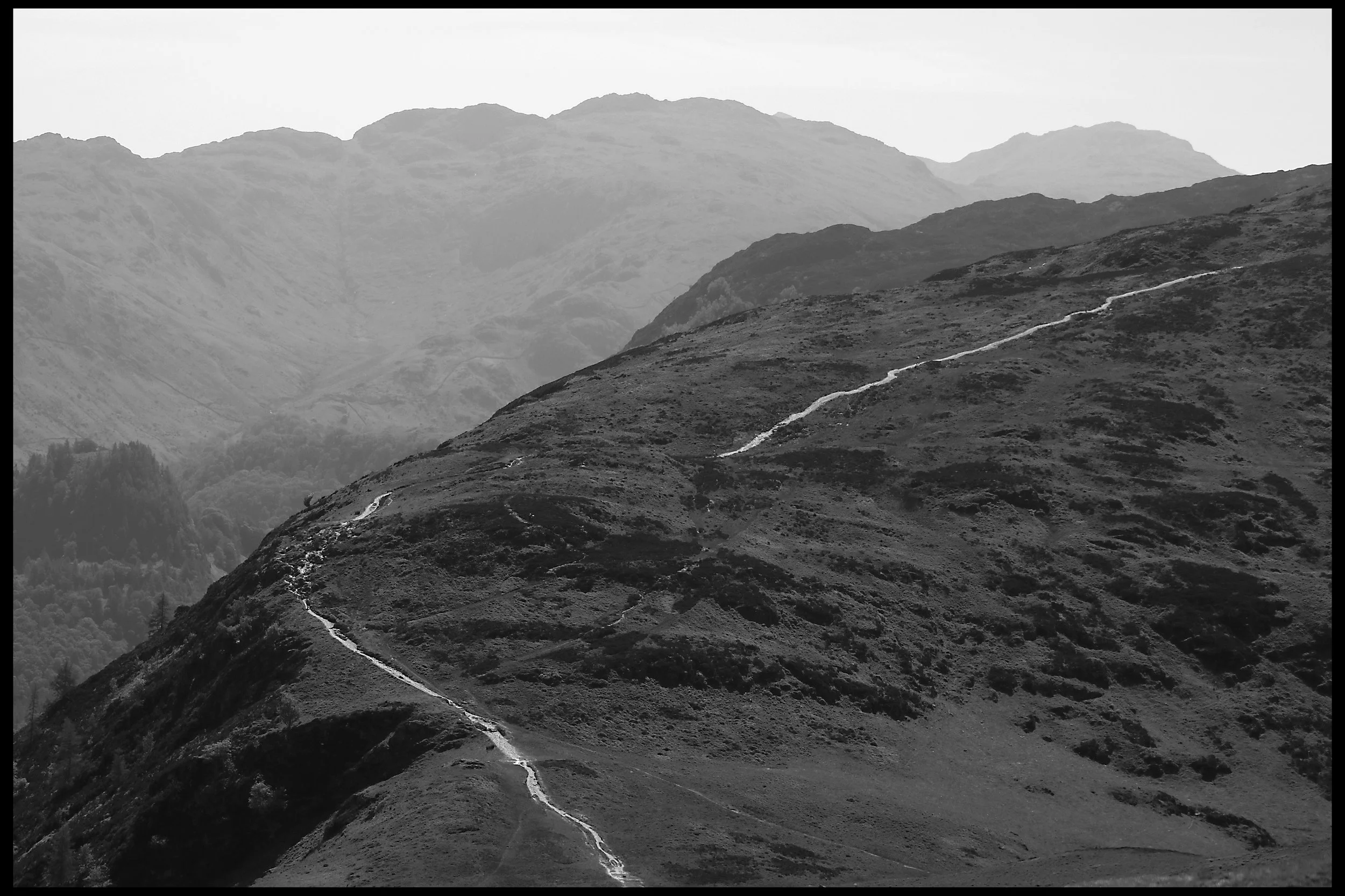
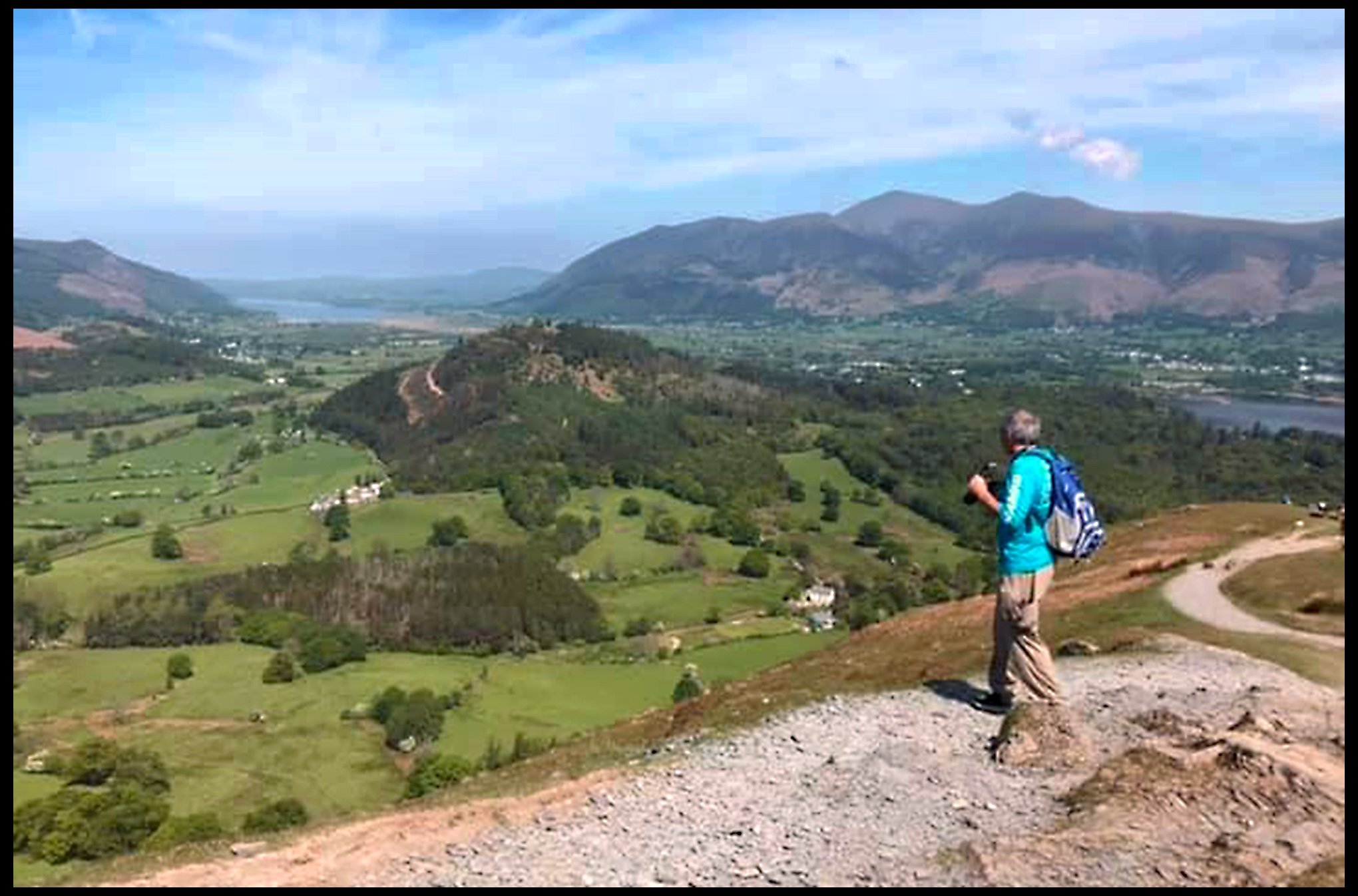
A trail leading away and upwards from the “Catbells” near Keswick in the Lake District of England, May 2019
“I’m on a roller coaster that only goes up, my friend,” says Augustus Waters. And if you have read the book “The Fault in Our Stars” by John Green, or watched the movie, you know how his ride ends. And yes, Augustus knows how it will end as well. His ironic, positive attitude is very different than those people that feel they do have to be going up all the time. There is always another goal to set, another project to complete, another race to win, another mountain to climb and another and another and another. It’s that desire to feel that hit of happiness and accomplishment again and again.
If you haven’t heard the term, this is what is called the hedonic treadmill. Psychology Today writes about it this way: “The hedonic treadmill is the idea that an individual's happiness level, after rising or falling in response to positive or negative life events, ultimately tends to move to where it was before the experiences.” That after each success – or failure – people adapt to the situation and that feeling of extra happiness and accomplishment fades, and we end up about where we started. So, we want that hit again, we look to the next big thing we can do or accumulate.
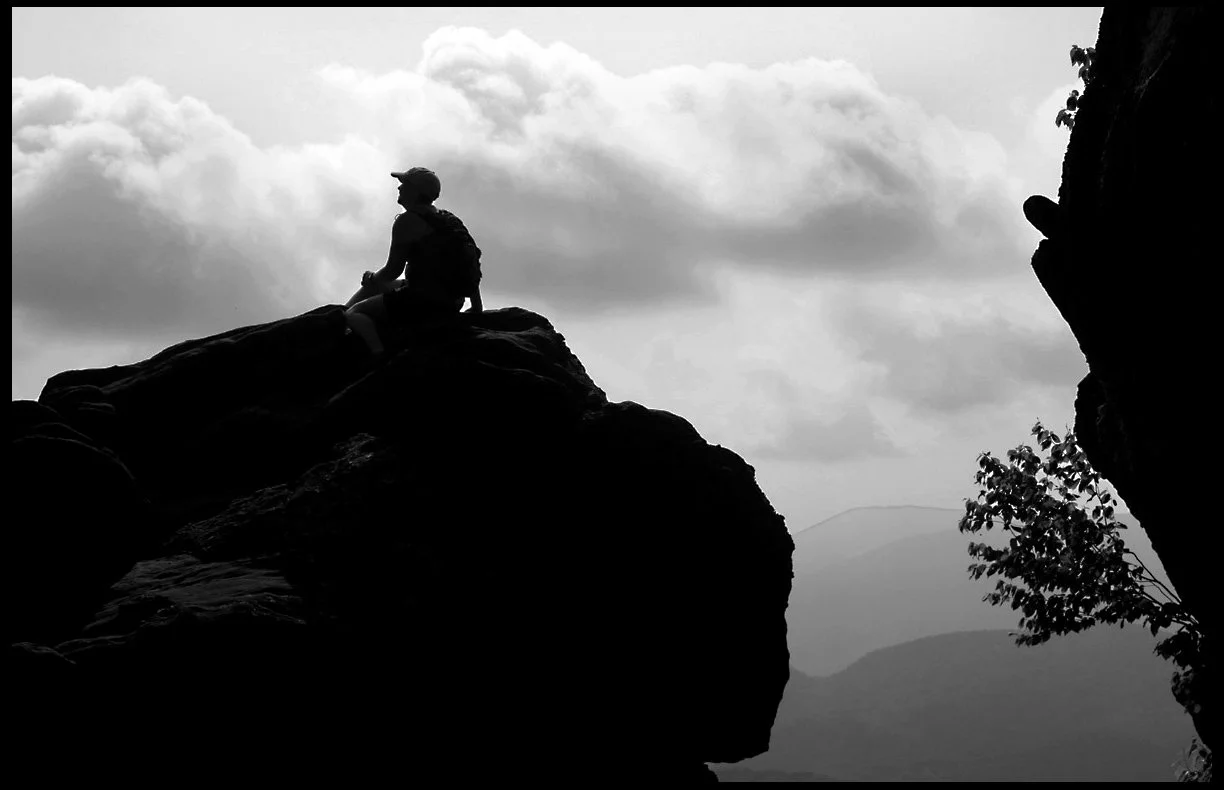
October 2026
My wife, Marcy, taking a break on a rock overlooking Roanoke, VA, May 2019
Then there is the treadmill’s fraternal twin: the arrival fallacy. This is when we arrive at a point in our life and we get something we have been working towards – say a relationship, a promotion, a car, a home, a summit – and we don’t feel as excited and fulfilled like we thought you would be. The idea that getting that thing or getting to that place was going to define us and bring us all the happiness we were looking for. When that let down happens, and it will, we think it’s because that goal – that summit – wasn’t exactly what we needed. We might think we were mistaken with that goal; we now think it’s this other thing. And this other thing usually needs to be bigger, farther, higher. And when we get there, then we will be happy like we think we should be.
Thus, in both cases, there are these ups and downs of success and then the letdown happens over and over, and can create a graph similar to the contours of a mountain range.
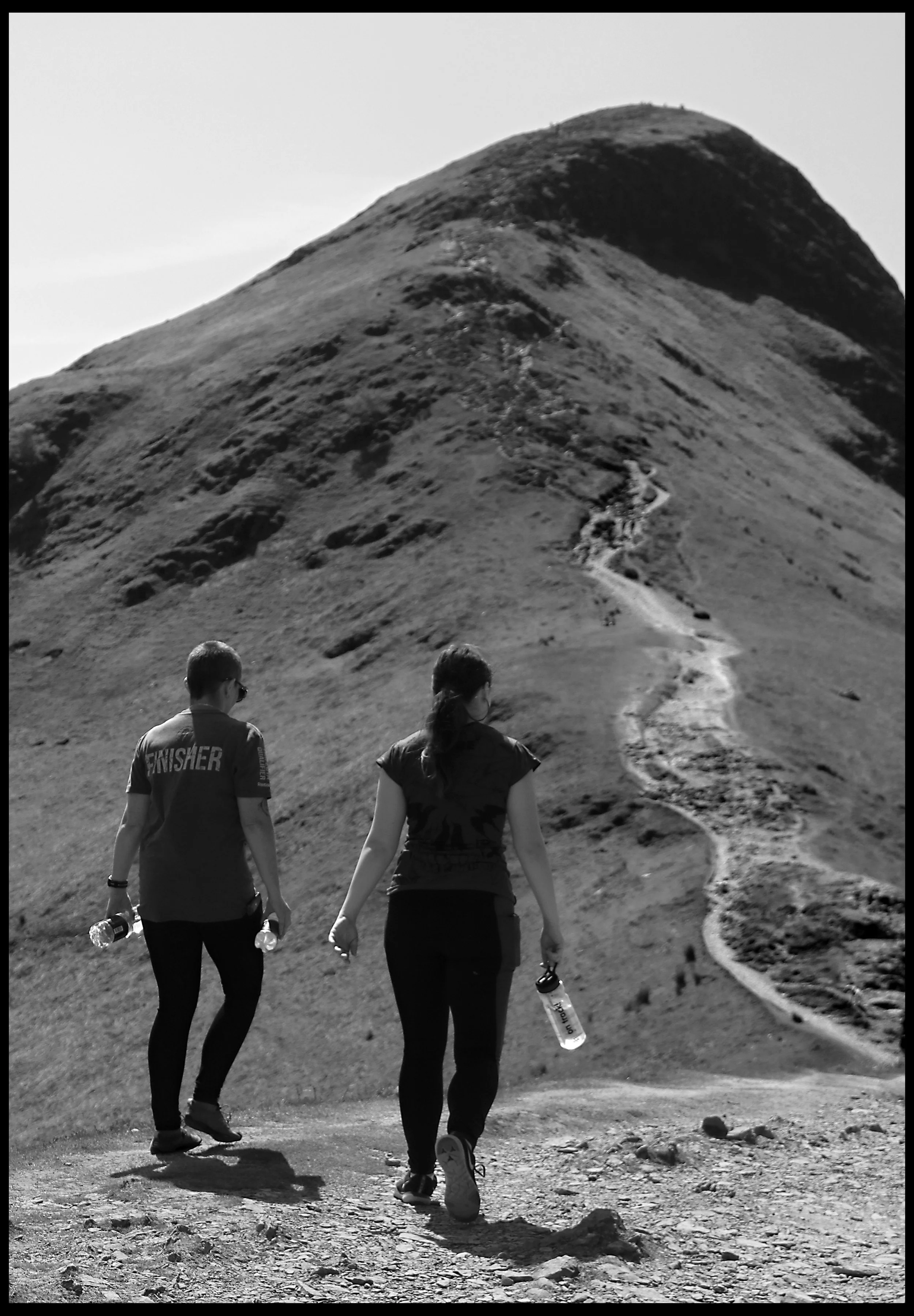
My wife, Marcy, and our daughter, Mina, hike up to the top of the “Catbells” near Keswick in the Lake District of England, May 2019. We thought we were soon to arrive at the summit, but there was yet another one after it.
As I wrote earlier, as I was looking for possible mountain climbing quotes to use for this, almost every single one talked about the going up, and doing whatever it takes to reach to summit. But, I don’t think I found any that talked about the other side – the return trip, the inevitable let down. And it was something I was noticing was happening to me while reading Matt’s book. Even though he has these great ideas in each chapter, and wonderful take aways after each essay, I noticed I was getting swept up in the dramatic photos and adventures he was having. Places I will likely never see, peaks I will never get to the top of. I started asking myself, how I could go out and do the things like he did, because they were so thrilling. I was worried, as I keep reading and wanting to be going up there with him, but I kept constantly hitting the wall of realization it wouldn’t happen that way for me. Over and over, the excitement of reading about these adventures was leading to reality of disappointment. I was on my own vicarious hedonic treadmill. And then… and then…
In one of the last essays of the book, he hit me with a chapter simply titled “Enough”. It was this chapter that really sparked that idea for this post. He addresses the idea that he, too, was “trapped in an endless cycle of pursuit, never fully content, always hungry for the next peak, the next milestone, the next accomplishment.”
A photo of me by my daughter as I was looking around at the summit of the “Catbells” near Keswick in the Lake District of England, May 2019.
Since our minds have evolved to seek for more, even when we have enough, we still seem to feel it’s not enough. We push ourselves to accumulate things and experiences, to look for new mountains to summit. But do we ever really step back and ask ourselves why we are doing it the way we do? Do we stop to enjoy what we have? Heck, do we even plan for the return trip from the summit? Because we know we do need to come down at some point, since there is no living at the summit.
So, next week, I’ll be looking at ways to think about how to come down from the summit safely. And ways to maybe help get off the treadmill, to arrive someplace and enjoy it. And even to explore what it looks like when we are unable to reach the summit. And in the meantime, maybe think about how in the past we picked the summits we went for. What drove us to pick that summit, that route, that timeline? Until then…
Thank you, and keep creating what you do.
Patrick Krohn