
You Can’t Live at the Summit Part 2: The Descent
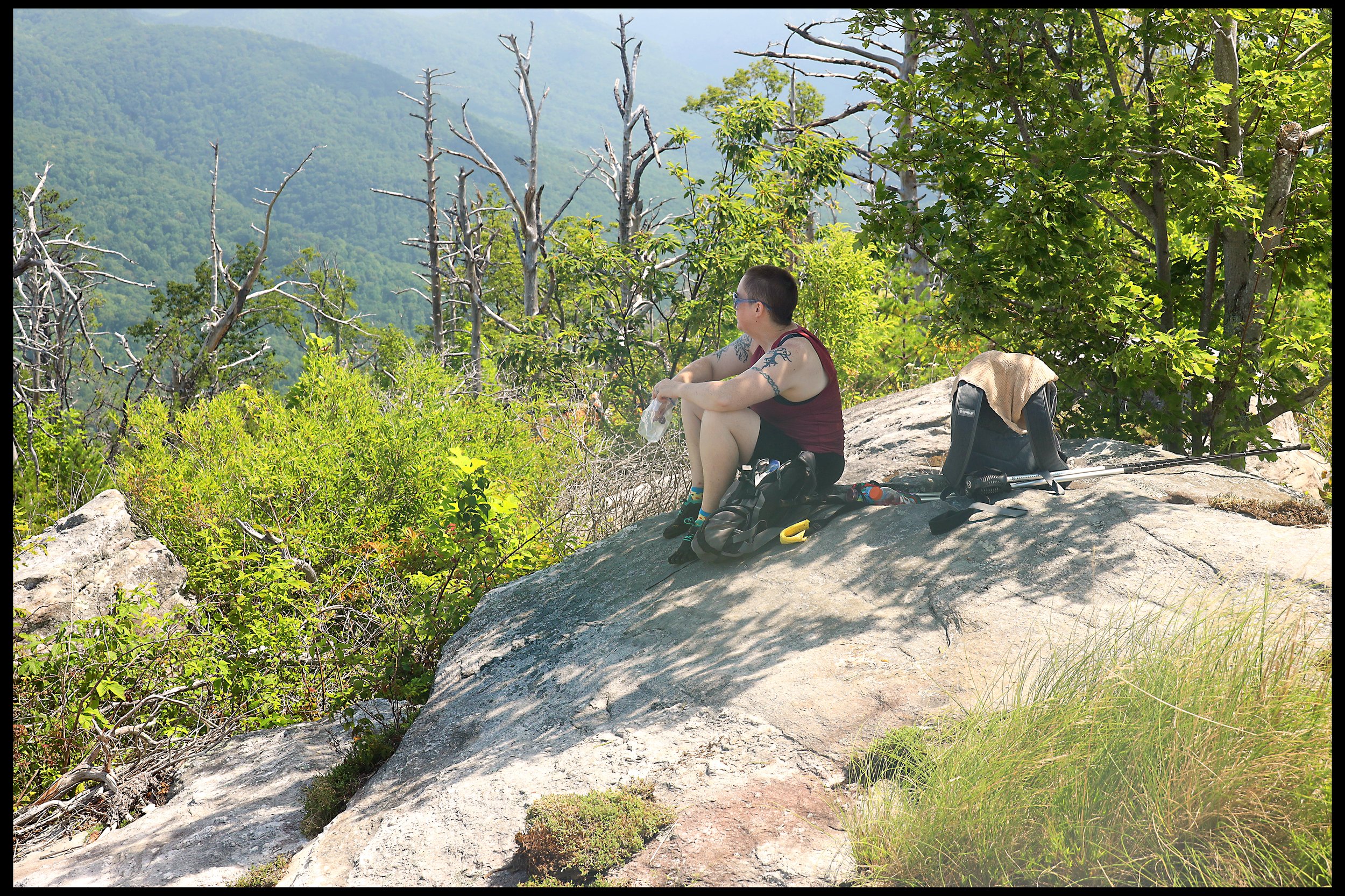
My wife, Marcy, takes a break near the summit of Table Rock Mountain in South Carolina August 2024.
Hello Friend,
A couple of years ago, my wife and I were camping at Table Rock State Park, and we wanted to hike to the top of Table Rock Mountain. Even though we knew this was going to be part of the trip, we didn’t really prep for it too much since it’s a well-established trail that many people take each day, and we had hiked to the top a few years earlier – OK about 10 years earlier.
On the way up we stopped a lot because my legs had been bothering me recently. On those stops, we looked around and enjoyed the views. Chatted with a few people on their way up or on their way down. It was tougher than we would have liked, though we had some encouragement in the form of people of all ages running – yes running – both up and down the trail. We would say, “If they can do that, we can at least keep going and make it to the top.” One interesting thing about that hike is the summit is actually in a wooded area, so you can’t see much. You need to hike about another half mile to get to areas with views. So, you go down a little bit after the summit to see anything. And on the way back, you go up to the summit again, then you start the real descent.
And the discomfort for my wife and me really kicked in. The pain in our under-trained legs and feet started to increase. We spend most of the way down trudging along looking at the trail and our feet. When we did stop, it was to get a drink, stretch the legs a bit, and continue our steady hike down. We didn’t look around; we didn’t engage in conversations like we did on the way up. The farther down we got, and the worse our legs felt, the more we said to ourselves – then later to each other – this was likely the last time we would venture to the top of that mountain.

A decaying leaf after a summer rain, Table Rock State Park August 2024
Like so many, we were excited about seeing the views from the top, it kept us going on the way up. On the way down it was, “How soon to the end, so we can make this all stop?” Definitely not as enjoyable. Though, there are things to prepare for and learn from any descent.
From my last post about summits and goals last week, don’t get me wrong, having them is a good thing. Reaching for goals and pushing yourself to make it to the summit is a way we learn new skills and get better at understanding ourselves. Having goals and summits to shoot for is not the issue. It’s that most people don’t think much about what happens after the goal/summit is reached. Hopefully, we get to spend a little time enjoying our accomplishment at the summit, but at some point, there needs to be the trek back down.
In our everyday lives, this is the post-goal come down that happens. That excitement and euphoria of reaching the goal starts to fade, and we are not sure what to do with it. In hiking and mountain climbing, we physically need to come down to get to our basecamp, our car, our home. We did what we came to do, but going down just doesn’t have the same feeling of excitement and anticipation as the way up. And since this is not something people talk about, or plan for, or even realize until the moment they have to head back down, this is when the post-summit letdown starts to kick in. And this is more often when mistakes are made, when injuries happen, and even depression can creep in. We are fatigued from the journey up; our mind is still on the summit, and what we saw there, and not on the goal of getting down safely.
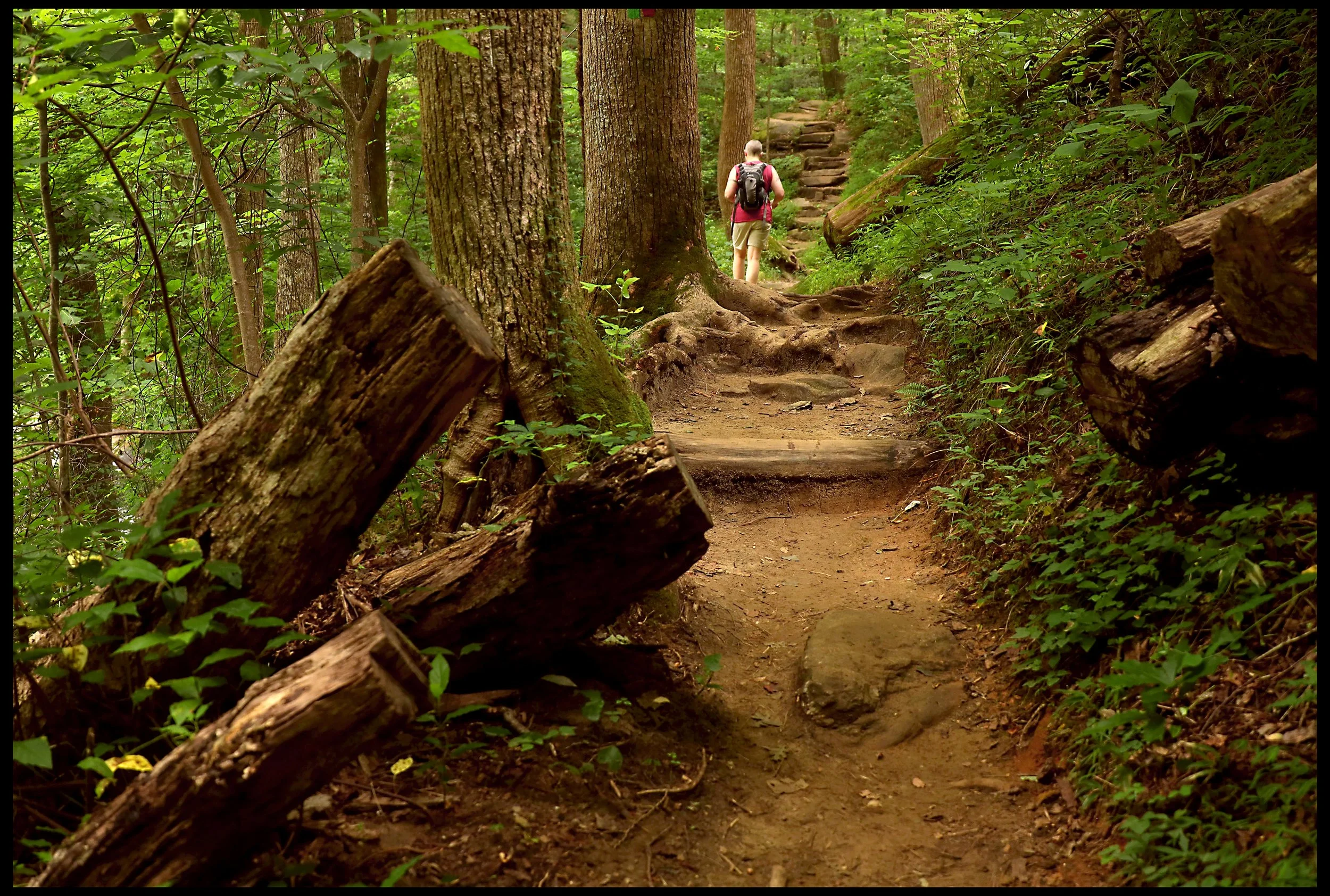
My wife, Marcy, on our way up Carrick Creek Loop trail at Table Rock State Park July 2023
There is an adage in mountain climbing that goes something like, “It’s not the assent that gets you; it’s the descent.” The meaning is, accidents are more likely on the way down then the way up. I wrote photographer and mountain climber Matt Payne to ask him if there was any truth to this. His reply when I asked was, “In short, YES.” He reminded me he wrote a little about this in his book “The Colorado Way”, and he also sent me a link to a post he used to do about tracking the mountaineering deaths in Colorado. His data, in just one state, showed that more than half of the deaths were on the way down, about a quarter were on the way up, and the rest were unknown. Some studies in other regions of the world say upwards of 75% of the accidents and deaths happen while descending.
So, why is it, when we talk about goals, we only talk about the way up and not the inevitable return trip – what to expect after the goal is reached? In actual mountaineering, this is discussed about and planned for, but still people talk about how difficult it is to come down from the summit. I think in our daily lives, with our goals and projects, we don’t account for what happens after. I think it’s that attitude of always onwards and upwards – there is no down. And if there is a down, it means you failed – even if you made the summit. Is this only an American/Western thing? Or is this a human thing? Either way, this is an incomplete part of the process.
In the creative world, the summit might be getting a book published, completing a long-term project, having that gallery show, opening night of a play, the start of a concert tour, the premier of the movie. In sports the summit is the championship – at the state, national or international level – The World Series, The Super Bowl, the Olympic gold medal. In some of these cases the downward journey might be a long and gradual one – like the tour that last for weeks or months. Others can be more immediate. One day you are the champion, and sometimes literally the next day, you are in the off season and everyone has moved on to something else. You are basically pushed off the summit and into freefall.

One of the few photos I took after reaching the summit of Table Rock Mountain August 2024.
I haven’t been able to watched the documentary “The Weight of Gold”, but I have heard some of the people in it talk about their experiences. The film was developed and produced by one of the greatest Olympic athletes, Michael Phelps, because of the depression he felt after each of his Olympics. It looks at how Olympic athletes train for their whole lives for this single goal, then once it’s done – win or lose – it’s over. It’s saddening to see people who are the best in the world at something, who trained for years, were given almost everything they needed to win, then suddenly left with almost no life or support once they finished. I first heard about this issue on the Rich Roll Pod cast with Olympic runner Alexi Pappas. I then listen to her book “Bravey”, where she details her drive and training to get to the Olympics. There she finished 17th and set a Greek national record. Then, as she wrote, “I achieved my wildest dreams, then depression hit.” He also had on the great short-track speed skater Apolo Ohno to talk about his post-Olympic struggles.
What’s crazy to me, is that we build up these people, set them on the pedestal, but then push them off for the next person, heedless if they survive the fall. We do this to ourselves as well. Maybe not as dramatically, but as we start heading down from the summit, there is the uncomfortableness of being past the goal. We ask ourselves how do we get that summit-feeling again? Instead of embracing that inevitable descent and what that part of the journey can teach us, we jump back on the closest hedonic treadmill, towards whatever goal, going in whatever direction, as long as it’s up.

A little snail I saw as we walked along the Carrick Creek Loop trail in Table Rock State Park July 2023.
November 2026
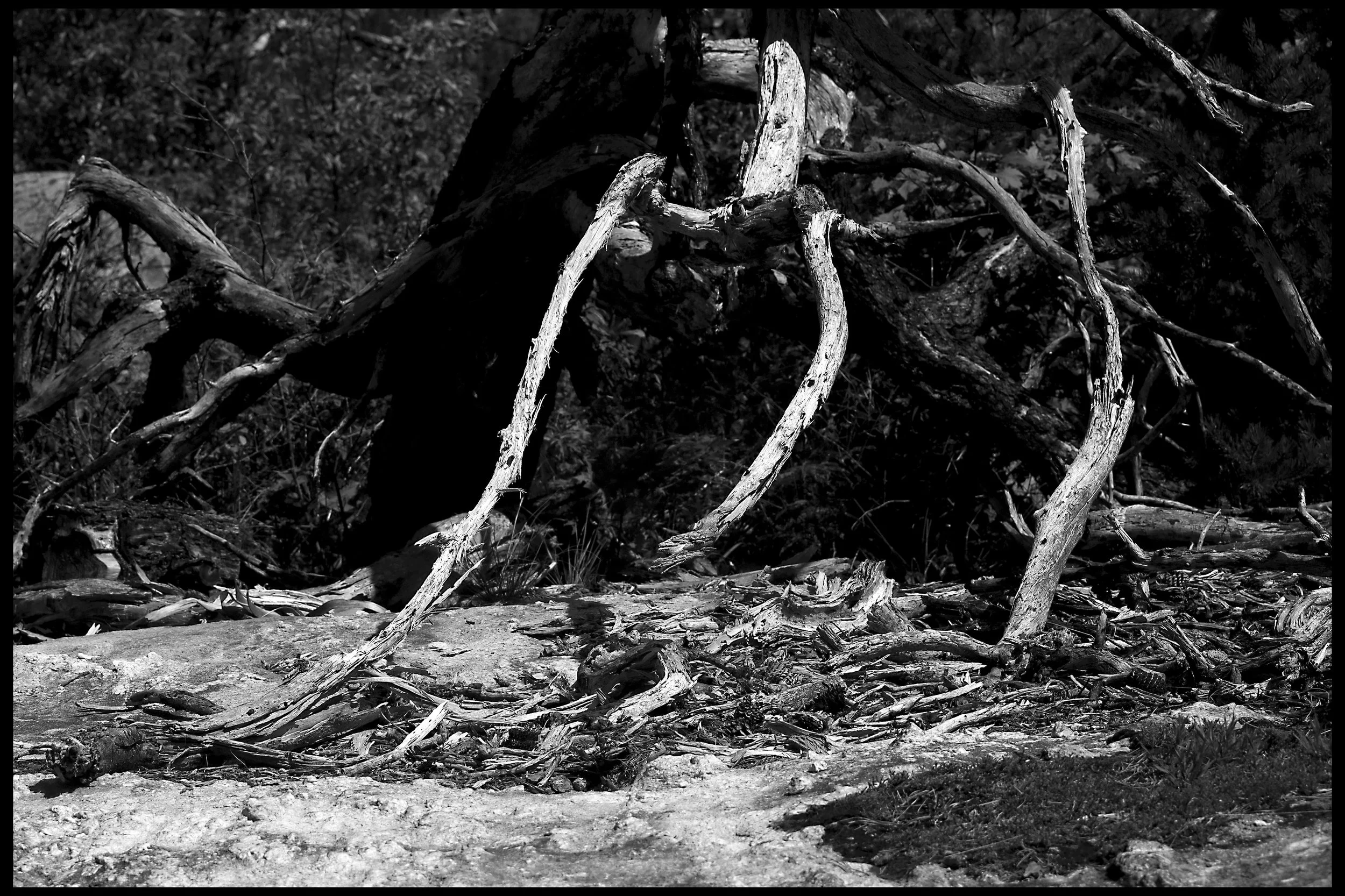
Dead and broken trees near the summit of Table Rock Mountain August 2024.
Some of the things my wife and I realized from our descent from Table Rock, was to train for coming down as well as going up. We need to move at our own pace – not what we might be seeing others do. Plan for breaks on the descent. Because it’s so easy to want to rush down, and our bodies take a different type of pounding going down, it’s worth it to stop and rest.
In the creative world I have a few thoughts, but no real proof these will work – for me or for anyone else. Since this is kinda “new territory” for most of us, I hope by just bring this up, it will get us to think about it more, and share how we each managed our own post-summit descents.
To start, as we are working on our “big goal”, we set up “weigh stations” for ourselves. Not only are they good for assessing how we are doing getting to our goal, but also a time to assess what new skills we might have learned so far. And will these new skills in some way help us when we are past the summit? Basically, what have we learned that we can carry through for future projects? Make sure to plan for – and enjoy – some recovery time. Our constant “go, go, go mentality” needs some “stop and smell the roses” time to reset and enjoy what we have just accomplished.
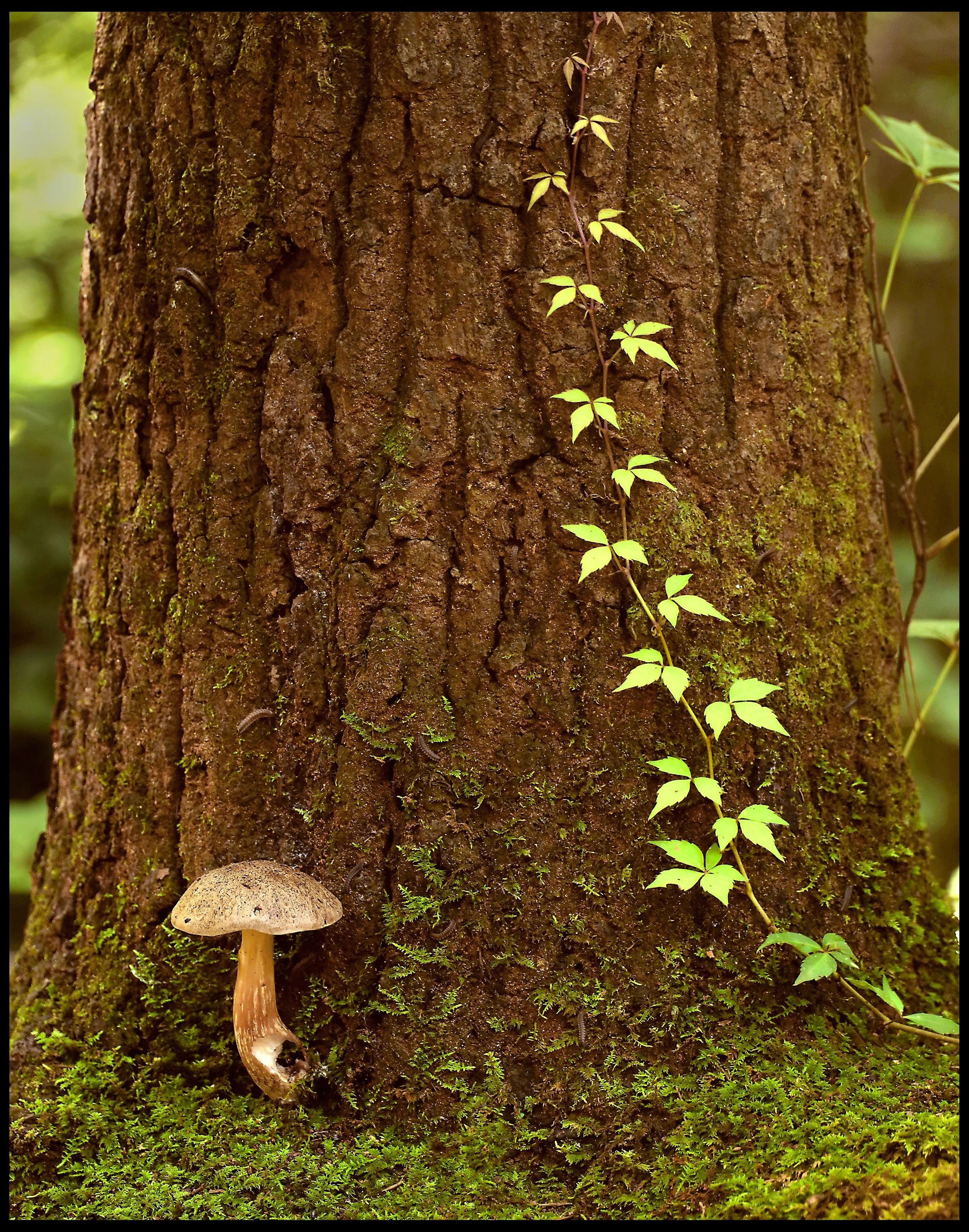
Mushroom and ivy on the side of the Carrick Creek Loop trail in Table Rock State Park August 2024. I liked this little scene, but the light was too harsh, so I had my wife stand just off to the side to use her shadow to soften the light.
At these weigh stations, we can also take note of what might have piqued our curiosity that was interesting, but might not be relevant to this current goal. Are there ideas and places we could explore more thoroughly when we have some extra time and energy after the goal is complete? These “side quests” could lead to our next interesting idea. Being a little less single-minded about our goals, and acknowledging these other curiosities, can help open us up to paths to explore and help mitigate the post-summit letdown.
“What goes up, must come down”, might be true, but the down doesn’t have to hit us hard. Since the downs will come – whether we want them to or not – we might as well have some ideas and plans in place to help us navigate them as best as possible. As I’ve said from the start, we can’t live at the summit. Because of that, we need to understand that getting back to our basecamp is just as important of a part of our journey as reaching our summits.
My challenge this week is to take into account what things might look like in your life after reaching a goal you are currently working on. But, what about the goals we don’t reach? That will be next week as I look at the times when we turned around on the trail to the summit.
Thank you, and keep creating what you do.
Patrick Krohn