
You Can’t Live at the Summit Part 3: Quitting Before the Summit
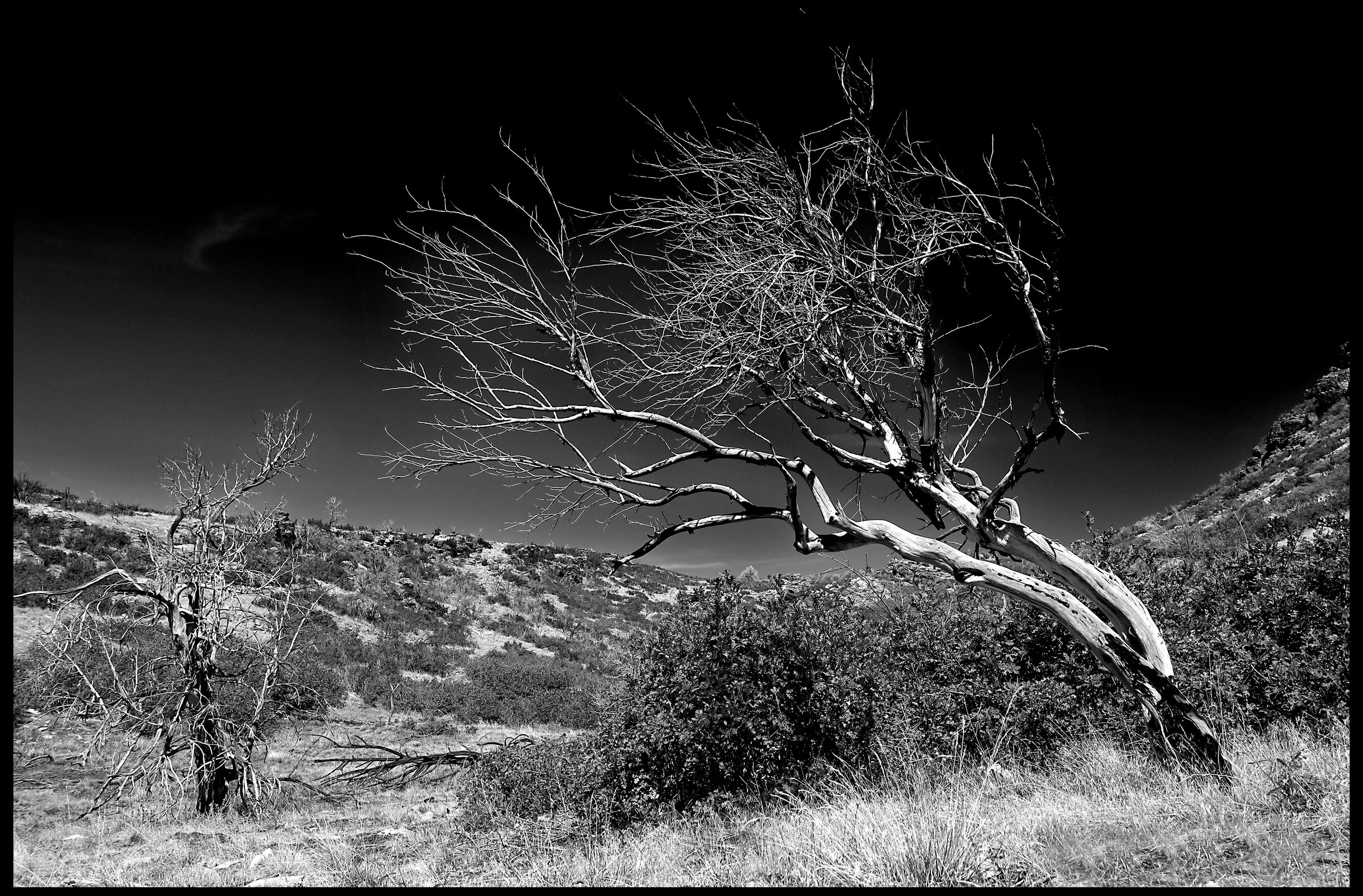
A windblown, dead tree near the point where my wife and I turned around on the Devils Den Memorial trail. Utah, September 2026
Hello Friend,
In the first part of this series, I looked at always chasing goals and the hedonic treadmill that it can put us on. The second was looking at the other side of reaching the summit: the descent and why it isn’t planned for enough. In this third part of my little trilogy, I’d like to look at why we sometimes don’t reach the summit, and how that can be a good and important part of our overall journey. To help start this off, a story about a recent set of adventures.
In September my wife and I were in Utah to visit her mother. In the central dessert area of the state, there are not too many hiking options. We picked a few we wanted to do, but on three occasions we decided to turn back well before reaching our destination. The first was at the Little Sahara Recreation Area. I thought it would be fun to photograph sand dunes. We bought our pass, and decided to drive to The Rockwell Wilderness Study Area, part of the park that wasn’t used for off-road vehicles. We hoped it would be less noisy and fewer people. We got lost on the dirt roads of the park. When we finally found the right one, it was so rutted, we kept bottoming out the rental car. After more then an hour of bumping and bouncing, zigging and zagging on these roads that were more hiking trail than road, we turned around. I was really bummed, because there were some great clouds, and I could see some really fun photo possibilities. But by then I was too frustrated from being jarred around to even think straight, let alone photograph straight.
The next day we were on more crazy dirt tracts looking for our next hike. And, once again, we made the decision to turn back before even starting that hike. Eventually, after driving around Oak Creek Canyon, we found the Devils Den Memorial trail. Finally, we got to hike. It was a bright and warm day – very good hiking weather. The memorial part of the name comes from a firefighter who lost his life during a wildfire in the canyon in 2006. (There was a fire there in 2012 as well.) Even though this is a pretty rugged hike, there were information plaques along the route and at the summit a memorial for the firefighter Spencer Koyle. But we never got to see it or that end of the trail, because we decided to turn back before the top.
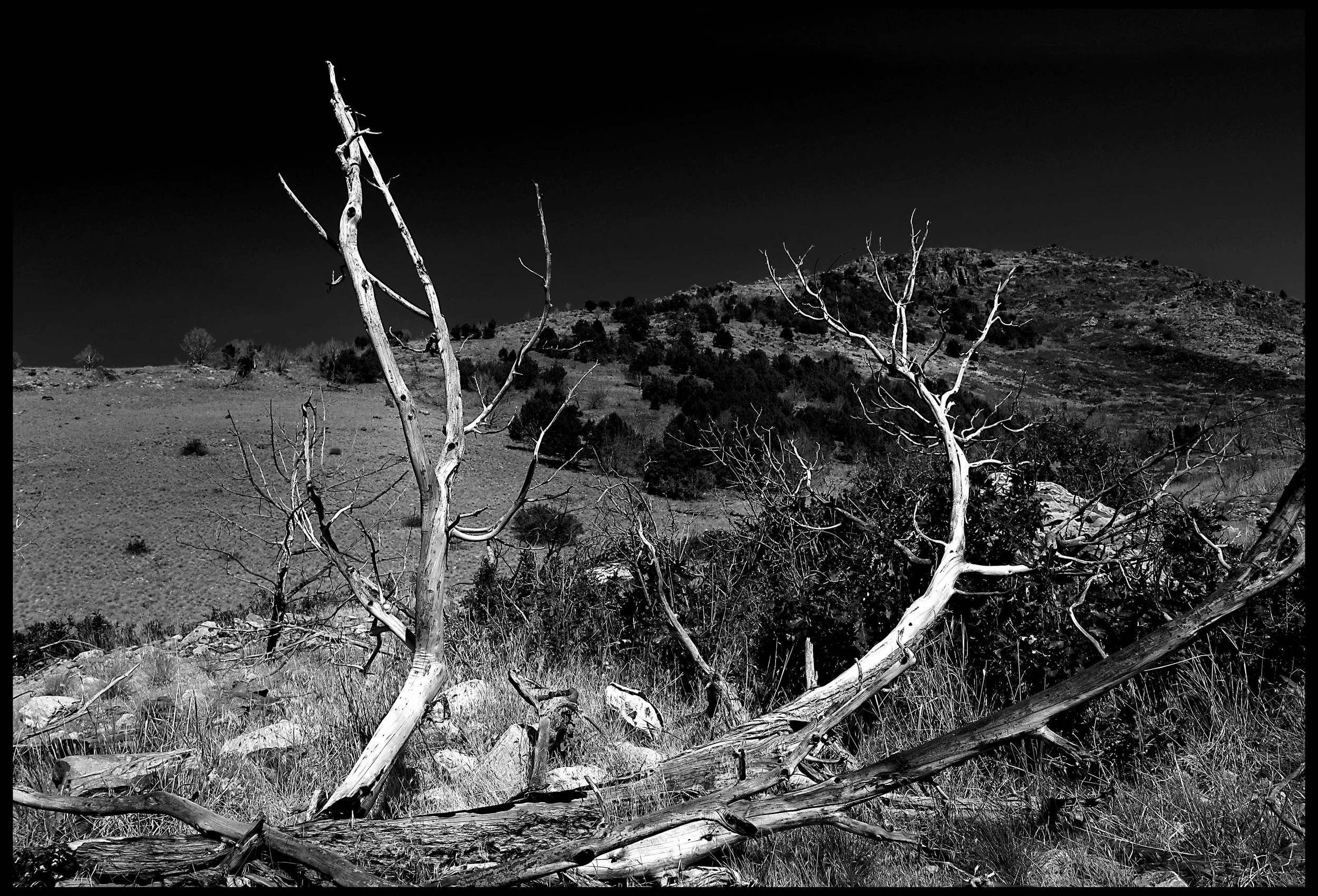
Sun-bleached and burnt limbs along Devils Den Memorial trail. Utah, September 2026
The weather was nice, we were feeling fine about our fitness, we had plenty of water and snacks, so those were not the reasons we turned back. We would have liked to have reached the summit and seen what there was to see there. But our goal wasn’t ever really the summit, it was to have a nice hike in the mountains. It was to see some different scenery then we normally get to see. It was to spend time hiking together outdoors – OK, even though we don’t actually “hike together”, because I’m always stopping to photograph. We knew at the summit we would need to turn around to head down, so, after a few hours, we turned around when we felt like we were done. We just looked at each other and decided this was as good as a place as any to head back. So, we did. No drama about not reaching “our summit goal.” No bad feelings that we thought ourselves failures.
Maybe some of you are thinking if we were close to the summit, why turn back early? That we should have kept going. The summit is the summit, and that’s what’s important, right? But the summit was not the goal or what was important to us this time. When we hiked Table Rock, yes, the summit was the goal. And to some extent, we paid a price for it. In this case, turning back was the right thing to do. Though, isn’t the “conventional wisdom” you’ll never amount to anything if you turn back every time you get board or it gets too hard, right? You’re “just a quitter!” And we all love to say, “quitters never win.” Well, let’s explore that idea a little bit…
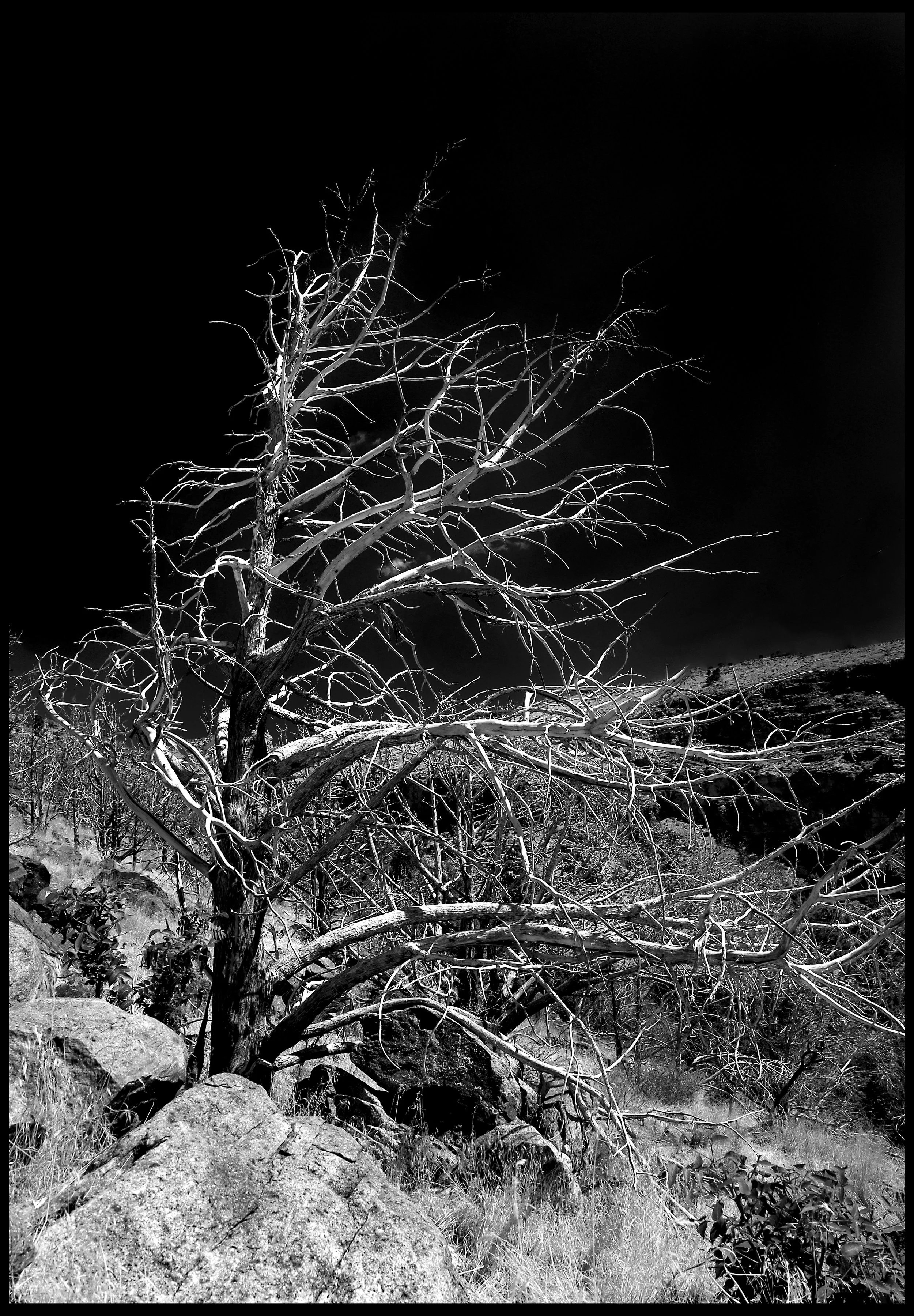
Dead tree that grew out of a rock on the Devils Den Memorial trail. Utah, September 2026
Looking at a few different situations, I’d like to explore how, when different people were faced with the option of quitting, not quitting or changing directions it led to different outcomes. And in most cases, by quitting one thing, they were able to put their efforts towards something better than what they quit.
The first story about quitting something comes from one of my favorite black and white photographers Cole Thompson. Cole shares the story about how his project “Ghosts of Auschwitz” came about. The power of it can not be denied. I won’t get into the details of it, because he does a much better job talking about it than I can. So, please follow the link. After seeing this work, many people suggested to Cole he was on to something, and there was more to explore. As any artist, when he got this positive feedback, he decided to set a new goal to continue with the theme of “ghosts” in other locations. It did not take long for Cole to realize this new goal was not coming together well and it wasn’t resonating with him like the Auschwitz work did. Instead of continuing on with something everyone was telling him would be great, he pulled back and quit. He saw this new work as too contrived, and would only dilute the power of the Auschwitz work.
Another quitting story involves one of the people I have really come to admire, Chase Javis. He wanted to write a follow up to his book “Creative Calling.” He had been working on the new book for 18 month – 5 doing research and 13 hard months of writing. He then realized he was writing the wrong book. He could have continued on to publish that book. I’m sure it would have been successful since he has a huge following that will buy almost anything he produces. Like Cole, Chase knew if he did publish it, it would also dilute the other works he had done. So, with just eight weeks to go before his deadline, he went back to his basecamp by trashing the first book. I’m sure at the time, his publisher and the people around him would rather he just finish what he started and make the all important deadline. But, instead, he put his time and effort into writing what was to become the aptly named “Never Play it Safe.”
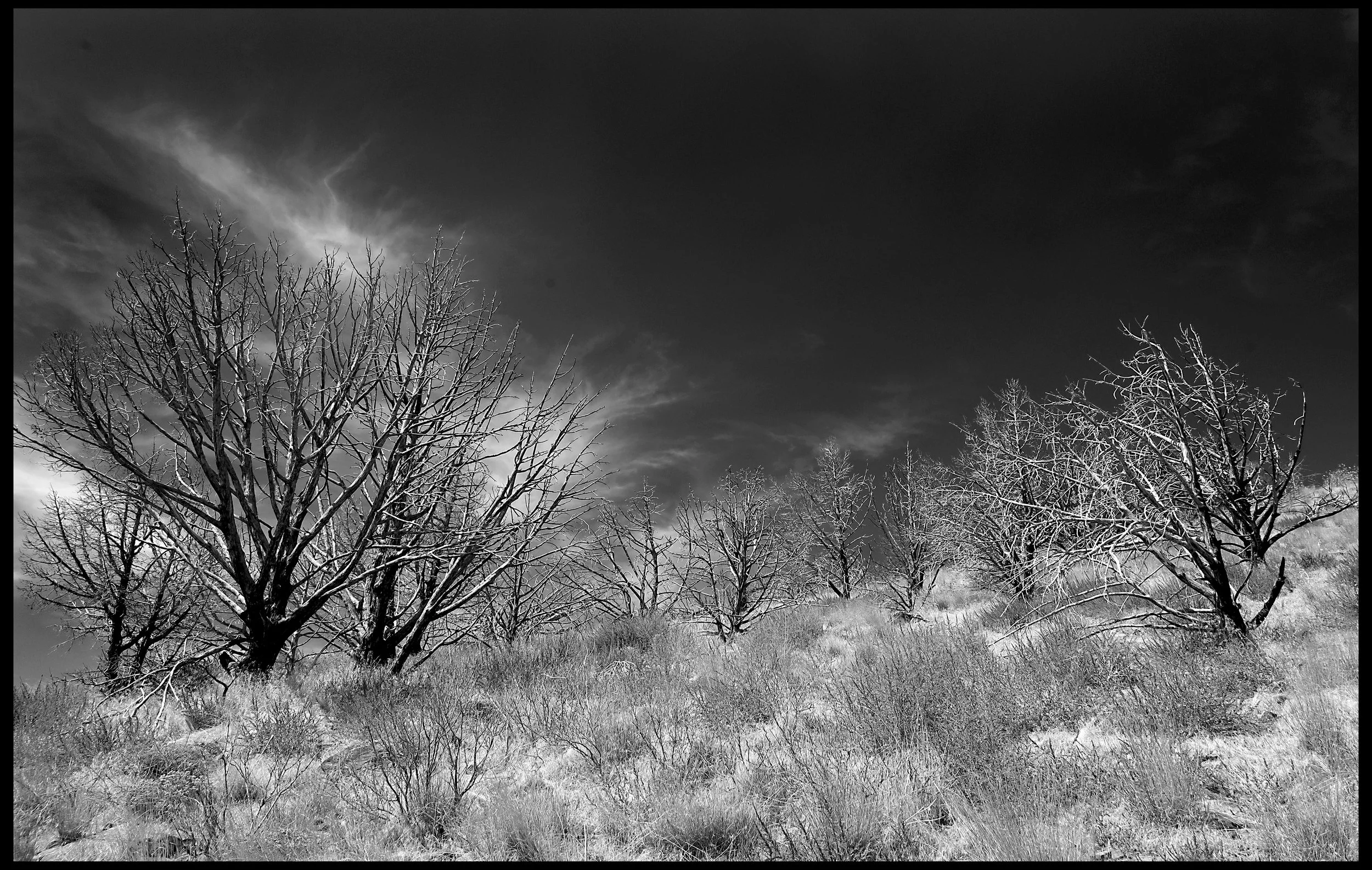
Skeletons of burnt trees along the Devils Den Memorial trail. Utah, September 2026
Two different projects, both getting external pressure to continue and not quit. In both cases, they had to look into themselves and decide which direction to go. Cole has a saying I think fits both cases, when he suggests to people they “do honest work.” By quitting the new ghost project, Cole was now free to pursue more honest work for himself. Chase, for his part, was able to produce and be proud of a book that he says is a much more honest representation of his life and his struggles. He is hopeful that by writing the book he did the way he did it, it will help others to quit those things that are holding them back from being honest with themselves.
In the artistic world, quitting or changing course usually happens when some part of the artist starts to realize they are on the wrong path. They might start to feel uneasy when they are working on a piece or project that doesn’t align with their values and their honest work. The work might get repetitive or boring for artist. Then they decide to quite and move on to other things. Though, in the sporting/exercising world, quitting or not quitting can have some very big consequences.
During the New York City Marathon a few weeks ago, a young 24-year-old woman named Rachal Apa died at mile 24 from what they think might be rhabdomyolysis – a rare muscle condition that can be brought on by over excursion and over training. She collapsed at mile 24 – almost within sight of the finish line. Did she push herself beyond what her body could handle? Or was it something else? Should she have stopped if she was not feeling well? Did she even know she was in trouble? We likely won’t know for sure. Though, talking about this with my wife, we were reminded of so many images of other athletes staggering the last few miles or feet of a race, just to get over the finish. Sometimes they made it on their own, sometimes other athletes helped them, sometimes medical personnel intervened, and sometimes not so good things happened. There are people that are so committed to the idea of finishing and finishing well, that they would not even take a brake to go to the bathroom, but instead pooped and peed themselves. (Search for the recent Hyrox Games to see what I’m talking about.)
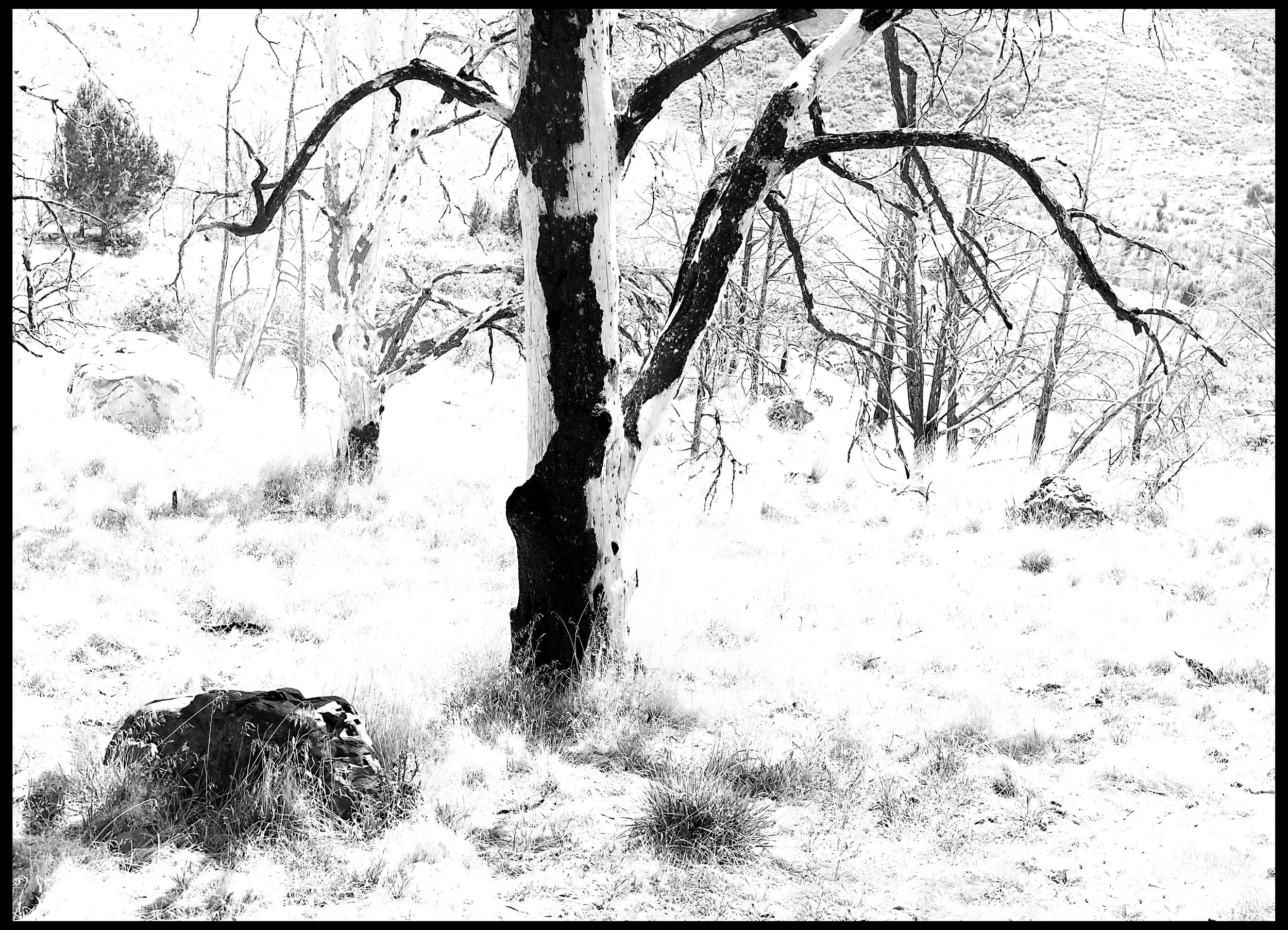
“Summer for Winter III” Burnt old trees on the Devils Den Memorial trail. Utah, September 2026
November 2026
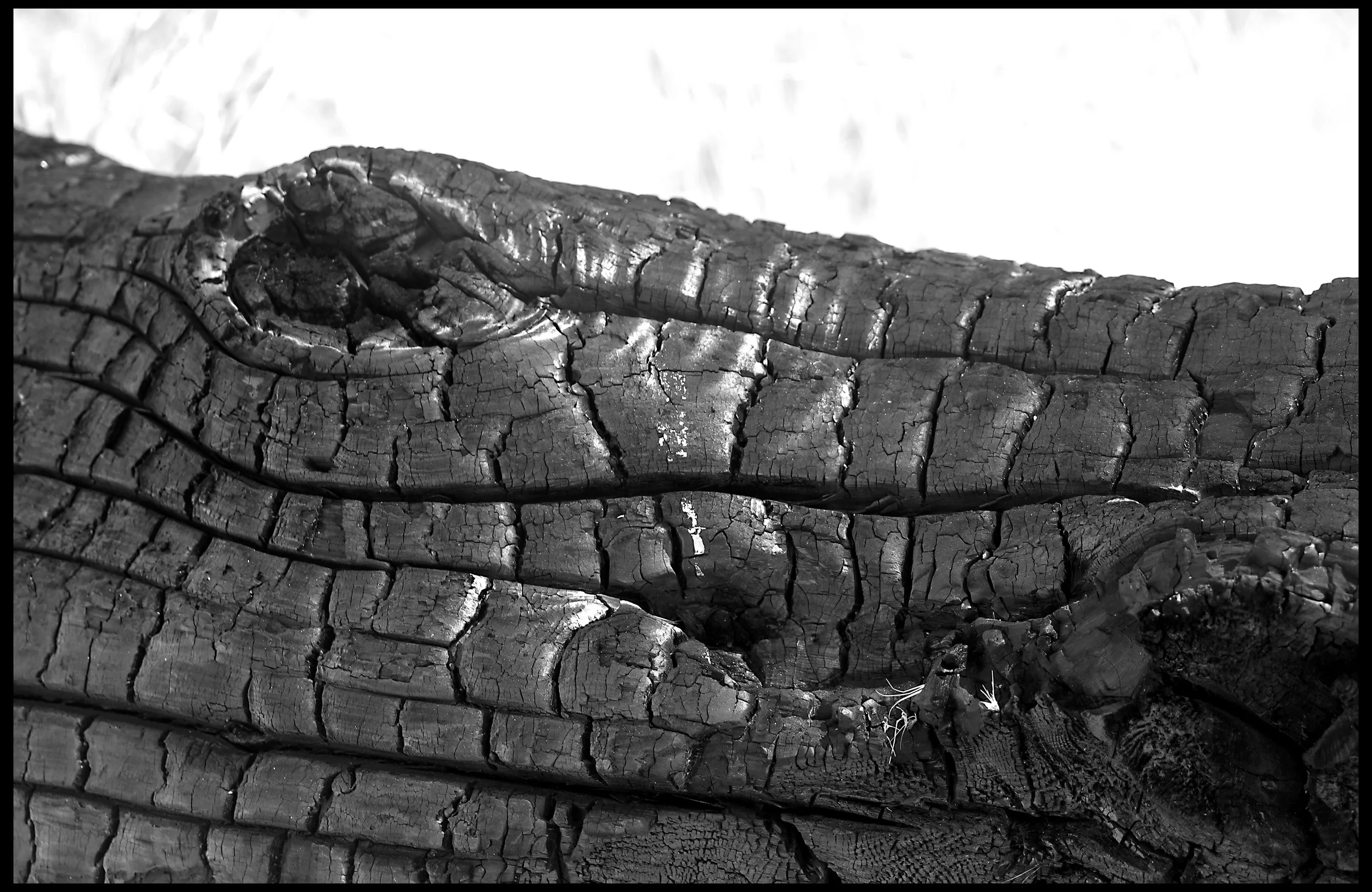
A burnt-log crocodile on the side of the Devils Den Memorial trail. Utah, September 2026
My wife is a registered dietitian and workout enthusiast, so seeing people in visible distress just to complete a sporting event, gets her very upset. I agree with her, instead of other athletes trying to help the person finish the race, they should help them get medical attention.
There is one young You-Tube lady we follow who we think is doing things right. Makari Espe has a channel called “I Fail Often.” I think the title and her attitude sum up so much what I’m trying to get at. She will try something for a while and show how things go for her – both good and bad. Some things work out and she keeps with them; some things don’t, so after a while she stops. We watched her as she went on a 100-kilometer bike ride. She was pushing herself, she was excited, but then things got a little dicey. She didn’t realize one of the later sections of her ride was on a very busy and winding road. Instead of pushing forward to her goal, and putting herself and her companion in a dangerous situation, she called her family to pick her up. She was bummed, she was a little embarrassed, but because she had tried other hard things and come up short, she was able to quickly get past that setback. She also used that experience to be better prepared the next time. A few months later, she did complete a different 100km ride.
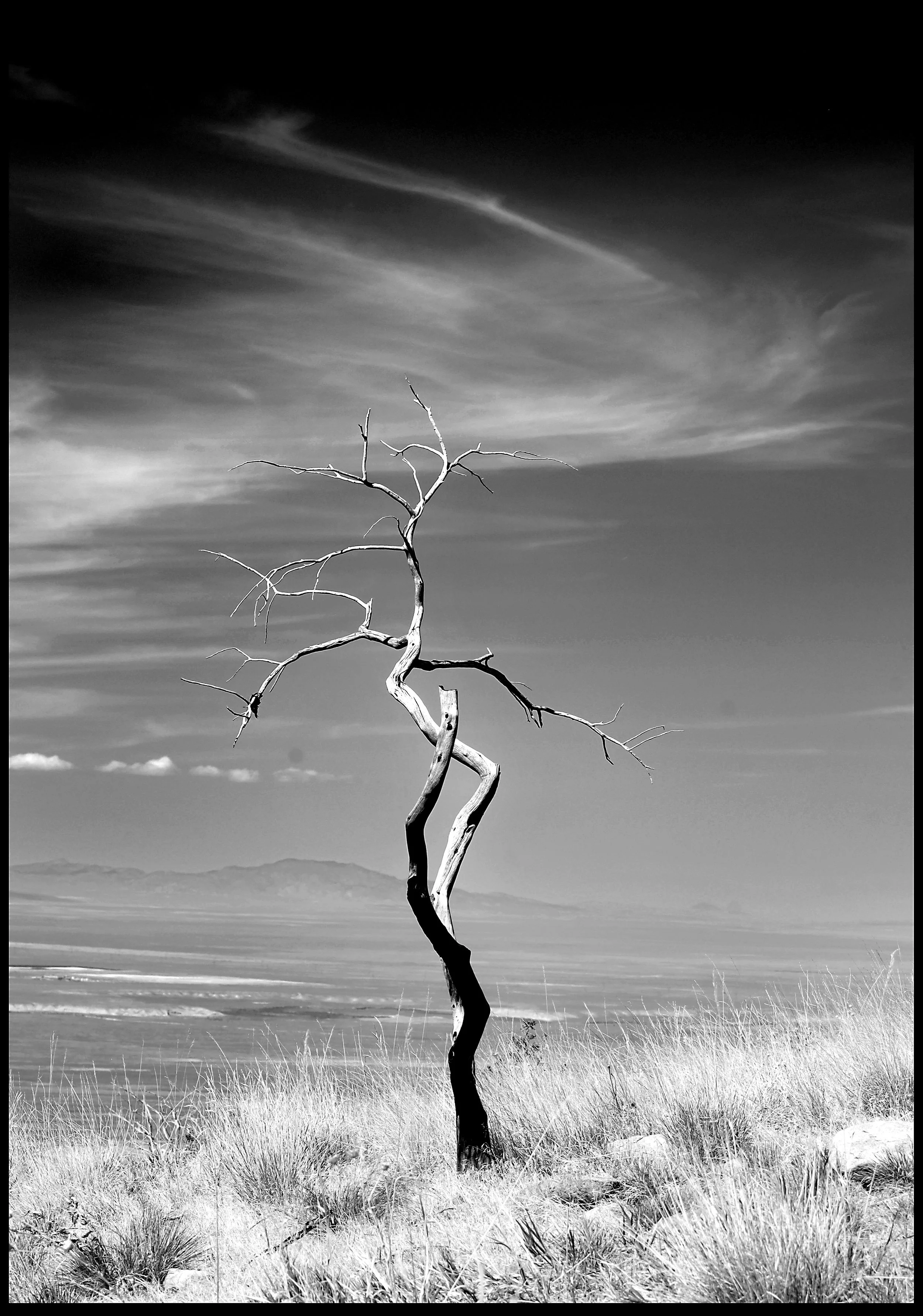
“Dance Between Earth and Sky” on the Devils Den Memorial trail. Utah, September 2026
I think Makari is showing that having goals and striving for them is a good and worthwhile thing. Though, when situations come up that force her to rethink them and even have her quit, she’s not devastated. She is holding her goals more loosely, and she does not value herself less as a person because she was unable to reach a particular goal or summit. As I wrote earlier about the hedonic treadmill of goals, I think it can also develop into an unhealthy treadmill of goal identity. The push can be so strong to reach the goal, everything else is pushed aside — our self-worth and sometimes our own safety. And if the goal is not reached, oh, no. That identity we have built up around ourselves is called into question. Then we are left empty, feeling like a loser, and questioning if it was even worth it. But we are not the goal, the goal is something we want to create or make happen in our lives to help us understand who we are a little more.
I hope that these small examples help us see better that quitting is always an option. How we react to it and what we do after that is also important. Do we tell ourselves “I’ve failed, I’m a loser and I’ll never amount to anything.” Or do we look a little more inward, and tap a little deeper and ask ourselves, “What is it I want to do instead? What’s important to me now, that I would rather be working on? How can I learn from this, so I am better prepared for my next goal?” Then, I hope we can more clearly decide if we want to continue up on the same path, go around on a different path, go back the way we came, or blaze a completely different trail in a different direction. Yes, quitting is always an option, though giving up on ourself or our dreams is not.
Thank you, and keep creating what you do.
Patrick Krohn
P.S. All the images this week were taken on that Devils Den Memorial trail in Oak Creek Canyon. All are straight black and white — not infrared. This is just what you get with a polarizer on a sunny day with deep blue skies.